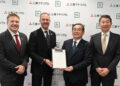









California-based Emerald Packaging has joined the US Flexible Film Initiative, as the first associate member to represent manufacturers of flexible packaging.
The non-profit industry group includes such brands as Mars, PepsiCo, Nestlé, General Mills, Mondelēz and Hill’s Pet Nutrition, and aims to help incentivize recycling of flexible packaging at scale that ultimately includes curbside collection.
Coalition members provide funding for recyclers including MRFs to launch recycling initiatives for film and flexible packaging, starting with California. These subsidies are meant to bridge the gap between the cost to recycle plastics and the price at which companies can sell the recycled material at profit.
USFFI is starting by focusing on California, whose developing SB 54 EPR law requires single-use packaging and plastic utensils to be fully recyclable or compostable by 2032.
Amid the law’s implementation, USFFI aims to establish consistent end markets for flexible packaging materials.
After reading about this new coalition late last summer, Emerald CEO Kevin Kelly sensed his company was a natural fit for the associate level of membership, being located in California and already using PCR to make flexible packaging.
And as the first associate member, he’s hoping to lead by example. “Flexible packaging companies have a significant stake in proving that flexibles can be economically recycled and reused, if the support is there to undergird the market,” he told Plastics Recycling Update.
For major consumer brands to help subsidize recycling is “a huge step” toward proving the market exists, he said. “The brands and the industry have really never done anything like that.”
Film and flexible packaging represent about one third of the total US packaging industry by weight, but less than 1% is recycled nationwide, according to data from The Recycling Partnership. Barriers to recycling include insufficient end markets, high processing costs relative to commodity prices, limited acceptance in residential collection programs, contamination, diverse packaging formats and sortation challenges.
“We’ve been jawboning for years for flexible packaging companies to get involved,” Kelly said. His own advocacy has included speaking with CalRecycle and working with his customers through the Western Growers Association on issues around SB 54. But to Kelly, USFFI’s efforts represent the first concrete solution.
“I feel like for the first time I’m part of doing something that points a way forward,” using action rather than just discussions to help advance recycling of film and flexible packaging, he said. In addition, over three decades of doing business in California, Emerald Packaging has developed a deep understanding of the state’s recycling markets, and that experience and commitment can help USFFI navigate the sweeping, complex legislation working its way toward implementation.
In a statement, Laurie Hansen, a longtime consultant to the flexible industry and government affairs advisor to Emerald, said that “joining USFFI with a major financial contribution shows their leadership is serious about recycling flexible packaging. Other manufacturers should be following in their footsteps before it’s too late to act.”
Maite Quinn-Richards, executive director of USFFI, added, “We invite other brands, retailers, and packaging converters to join and add their resources and leadership to this effort. Expanding our membership strengthens the funding pool and accelerates market development.”
Quinn-Richards is also president of Resource Recycling, Inc., publisher of Plastics Recycling Update.