












Resource Recycling
  • The Latest
  • Analysis
    • All
    • Certification Scorecard
    • Industry Announcements
    • Opinion

    Closed Loop Partners acquires Sutter Metals, connecting electronics disposition to metals recovery

    Certification Scorecard — Week of March 30, 2026

    Certification scorecard – Week of March 23, 2026

    Certification Scorecard – Week of March 16, 2026

    Groups identify recovered plastics users in the Northeast

    Bale pricing for recycled plastics diverges

    Why global ITAD is stranded in the Gulf

    Why global ITAD is stranded in the Gulf

    Certification scorecard for the week of March 9, 2026

    Diversion Dynamics: Secondhand exports slow down fast fashion

    Certification scorecard for the week of March 2, 2026

  • Conferences
  • Publications

    Other Topics

    Textiles
    Organics
    Packaging
    Glass
    Brand Owners

    Metals
    Technology
    Research
    Markets
    Grant Watch

    All Topics

Subscribe
No Result
View All Result
Resource Recycling
  • The Latest
  • Analysis
    • All
    • Certification Scorecard
    • Industry Announcements
    • Opinion

    Closed Loop Partners acquires Sutter Metals, connecting electronics disposition to metals recovery

    Certification Scorecard — Week of March 30, 2026

    Certification scorecard – Week of March 23, 2026

    Certification Scorecard – Week of March 16, 2026

    Groups identify recovered plastics users in the Northeast

    Bale pricing for recycled plastics diverges

    Why global ITAD is stranded in the Gulf

    Why global ITAD is stranded in the Gulf

    Certification scorecard for the week of March 9, 2026

    Diversion Dynamics: Secondhand exports slow down fast fashion

    Certification scorecard for the week of March 2, 2026

  • Conferences
  • Publications

    Other Topics

    Textiles
    Organics
    Packaging
    Glass
    Brand Owners

    Metals
    Technology
    Research
    Markets
    Grant Watch

    All Topics

Subscribe
No Result
View All Result
Resource Recycling
No Result
View All Result
Home E-Scrap

Right to repair in WA and battery EPR in Nebraska

Marissa HeffernanbyMarissa Heffernan
May 22, 2025
in E-Scrap
Right to repair in WA and battery EPR in Nebraska

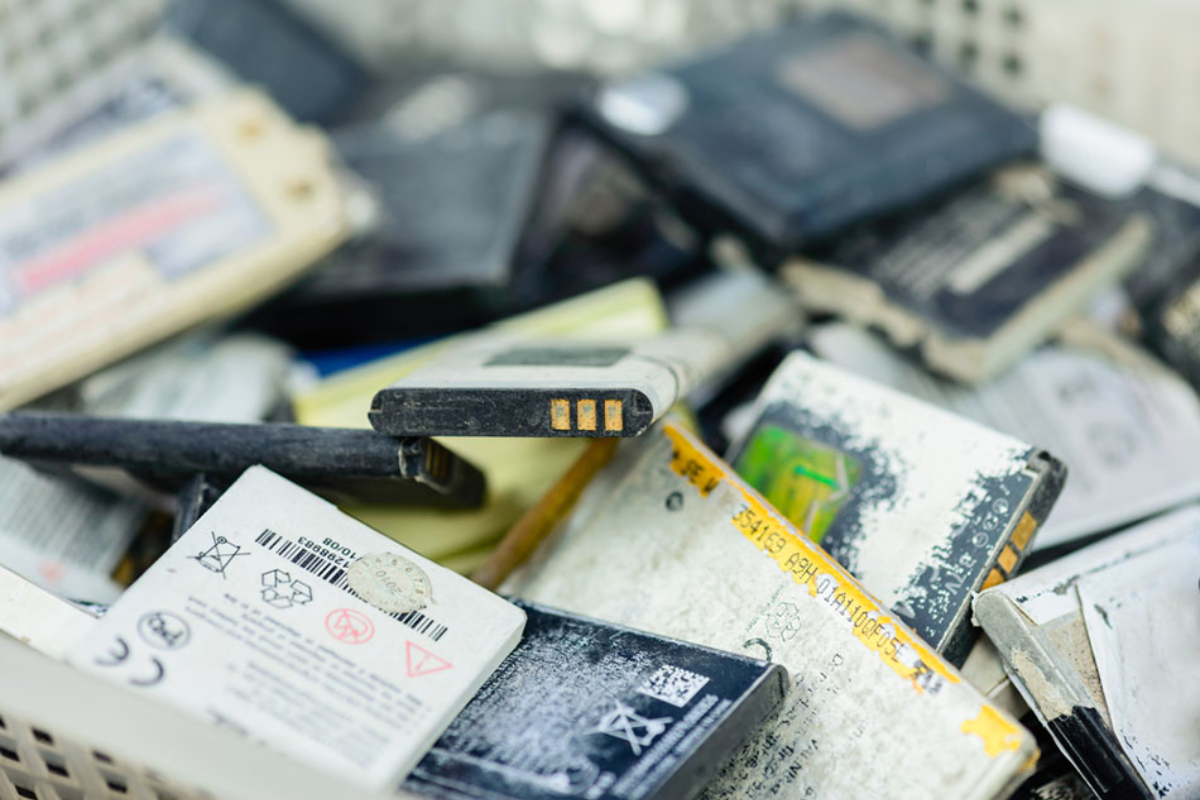
Governors in Washington and Nebraska signed e-scrap bills into law recently, giving Washingtonians the right to repair their consumer electronics and Nebraskans an extended producer responsibility program for batteries. 

LB 36, the Safe Battery Collection and Recycling Act, marks Nebraska’s first EPR attempt, according to the Nebraska Recycling Council. It was signed into law on May 20 after passing a final reading vote of 43-6 on May 14. 

Executive Director of the Nebraska Recycling Council Kim Carroll Steward told E-Scrap News the passage of the bill “is a major win for safety, economic, and environmental protection in Nebraska.” 

“By improving the way we manage and dispose of lithium batteries, this legislation will help prevent fires, protect Nebraskans, and increase diversion from our landfills, ” she added. “It’s a smart, forward-thinking step toward a safer, cleaner future for our communities.”

The law does not set recycling targets but enacts a battery landfilling ban effective Jan. 1, 2028. The same date is the deadline for producers and retailers to join a battery stewardship organization. By 2029, all batteries must be marked with its chemistry and an “indication that the battery should not be disposed of as household waste.” 

Those requirements don’t apply to batteries that are less than one-half inch in diameter. 

Producer plans are due to the state by Jan. 1, 2027, and they must contain details of how the producers intend to meet convenience standards. Under the law, producers must also report on the weight of batteries sold and collected, as well as a breakdown by battery chemistry. Point-of-sale fees are not permitted to fund the stewardship plan. 

In Washington, right-to-repair bill HB 1483 was signed into law on May 19, following a final vote in the Senate of 48-1 on April 10 and the House concurred on April 17 with a vote of 94-1.

The law applies to covered products first sold or used in the state on or after July 1, 2021. It would ban parts pairing for devices sold after Jan. 1, 2026. 

It aims to “broaden access to the information and tools necessary to repair digital electronic products, including computers, cell phones, appliances, and other nonexempted products in a safe, secure, reliable, and sustainable manner, thereby increasing access to appropriate and affordable digital electronic products, supporting small businesses and jobs, and making it easier for all residents of Washington state to connect digitally,” according to its text. 

In addition, the law has a section requiring repair providers to provide certain information to customers before products for repair, including the steps to take to safeguard data and their right to privacy under various state laws. 

WashPIRG in a press release called the signing a “landmark win.” Charlie Fisher, senior advisor with WashPIRG, added that “as a tech industry leader, Washington is no stranger to innovation.”

“I’m proud that we’re moving forward on an innovation even more critical than a new gadget: the right to fix our electronic devices,” Fisher said. “By eliminating manufacturer restrictions, the Right to Repair will make it easier for Washingtonians to keep their personal electronics running. That will conserve precious natural resources and prevent waste.”

Withdrawn and dead bills

As is typical in any legislative session, not all bills make it into law. With legislative session coming to a close in many states this month, here are some e-scrap-related bills that died:

  • Alabama HB 476, a right-to-repair bill that failed to move out of committee before the end of the legislative session. 
  • Alaska SB 61, an electronics EPR bill that failed to move out of committee.

  • Alaska SB 111/HB 162, a pair of right-to-repair bills that failed to move out of committee. 
  • Florida S 1132, a right-to-repair bill that was withdrawn. 
  • Georgia HB 320, a solar panel landfill ban bill that failed to move out of committee. 

  • Hawaii SB 391/HB 332, bills that would have expanded the current e-scrap EPR program to include li-ion batteries. They failed to move out of committee.
  • Indiana HB 1060, a right-to-repair bill that failed to move out of committee.

  • Iowa SF 545/HF 726, an EPR bill for batteries that failed to move out of committee.
  • Maryland SB 591/HB 931, electronics EPR bills that failed to move out of committee.

  • Maryland SB 686, an EPR bill for batteries that failed to move out of committee.

  • Minnesota SF 1690/HB 1420, EPR bills for circuit boards, batteries and electrical products that failed to move out of committee.

  • Missouri SB 593/HB 1508, EPR bills for batteries that failed to move out of committee.

  • Missouri HB 582, a right-to-repair bill that failed to move out of committee.

  • New Mexico SB 69, a right-to-repair bill that failed to move out of committee. 

Tags: BatteriesEPR
TweetShare
Marissa Heffernan

Marissa Heffernan

Marissa Heffernan worked at Resource Recycling from January 2022 through June 2025, first as staff reporter and then as associate editor. Marissa Heffernan started working for Resource Recycling in January 2022 after spending several years as a reporter at a daily newspaper in Southwest Washington. After developing a special focus on recycling policy, they were also the editor of the monthly newsletter Policy Now.

Related Posts

Apparel retailer organization challenges SB 707 textile PRO selection

byStefanie Valentic
April 2, 2026

With the July 1 deadline looming, the American Apparel & Footwear Association has filed a petition questioning CalRecycle's selection of...

Waste Connection recycling cart in The Dalles, Oregon

First Oregon community expands curbside recycling with EPR funding

byBrian Clark Howard
April 1, 2026

The City of The Dalles in northern Oregon is now rolling out nearly 5,000 new 90-gallon recycling carts to customers...

Quebec PRO reflects on first year of packaging EPR

byAntoinette Smith
March 30, 2026

The province's all-packaging collection approach has simplified messaging while providing lessons for the PRO as well as for industry.

ag plastics field

Ag industry holds potential for recycling feedstock

byStefanie Valentic
March 24, 2026

With less than 15% of US agricultural plastics currently being recycled, insiders say the gap between what's possible and what's...

Traceability tools add recycled material trust

Industry coalition seeks injunction against California’s SB 343

byStefanie Valentic
March 19, 2026

A coalition of packaging producers, farmers, restaurants and grocers has filed a class action lawsuit seeking to block enforcement of...

EPR expanding beyond packaging into tougher waste streams

EPR expanding beyond packaging into tougher waste streams

byScott Snowden
March 19, 2026

Proposals beyond packaging include boat wrap, hazardous products and oil containers, though infrastructure gaps and unclear producer rules remain, panelists...

Load More
Next Post

News from Ball, Ellen MacArthur Foundation and more

More Posts

Quebec PRO reflects on first year of packaging EPR

March 30, 2026

ReElement, Mitsubishi partner on rare earth supply chains

March 31, 2026
Belgian and Flemish flags fly against a backdrop of an ocean beach

PureCycle receives €40m EU grant for new plant

March 26, 2026

Report pegs fire losses at $2.5b in US and Canada recycling industry

March 27, 2026
#ESC2025 Speaker Spotlight: Matthew Young

From bootstrap to boom: EVR poised for growth after capital injection

March 26, 2026
URT builds alliance to remake electronics plastics at scale

Less premium smartphone inventory is reaching recyclers

March 30, 2026

PCA closing Richmond plant

April 2, 2026
Waste Connection recycling cart in The Dalles, Oregon

First Oregon community expands curbside recycling with EPR funding

April 1, 2026
Groups identify recovered plastics users in the Northeast

Bale pricing for recycled plastics diverges

March 17, 2026
Unilever shifting focus to flexibles targets

Unilever shifting focus to flexibles targets

March 23, 2026
Load More

About & Publications

About Us

Staff

Archive

Magazine

Work With Us

Advertise
Jobs
Contact
Terms and Privacy

Newsletter

Get the latest recycling news and analysis delivered to your inbox every week. Stay ahead on industry trends, policy updates, and insights from programs, processors, and innovators.

Subscribe

Welcome Back!

Login to your account below

Forgotten Password?

Retrieve your password

Please enter your username or email address to reset your password.

Log In

Add New Playlist

No Result
View All Result
  • The Latest
  • Analysis
  • Recycling
  • E-Scrap
  • Plastics
  • Policy Now
  • Conferences
    • E-Scrap Conference
    • Plastics Recycling Conference
    • Resource Recycling Conference
    • Textiles Recovery Summit
  • Magazine
  • About Us
  • Advertise
  • Archive
  • Jobs
  • Staff
Subscribe
This website uses cookies. By continuing to use this website you are giving consent to cookies being used. Visit our Privacy and Cookie Policy.