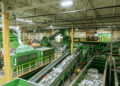










Many households have a drawer full of old cell phones, computer equipment and other abandoned electronics. Even those of us who work in the electronics recycling and refurbishment industry may be accustomed to stockpiling or discarding old electrical products instead of seeking repairs. In totality, this creates a mountain of electronic waste that is growing by the day.
On average, the total weight (excluding solar/photovoltaic panels) of global electrical and electronic equipment (EEE) consumption increases annually by 2.5 million metric tons. The Global E-waste Monitor 2020 also predicts global e-waste will reach 74 million metric tons by 2030, almost doubling the amount of e-waste in just 16 years.

E-waste is the world’s fastest-growing domestic waste stream, fueled mainly by higher consumption rates of electric and electronic equipment, short life cycles and few options for repair. According to the report, “only 17.4% of 2019’s e-waste was collected and recycled. This means that gold, silver, copper, platinum and other high-value, recoverable materials conservatively valued at $57 billion – a sum greater than the Gross Domestic Product (GDP) of most countries – were mostly dumped or burned rather than being collected for treatment and reuse.”
E-waste’s exponential growth calls for a shift in the business environment pertaining to how companies recycle and refurbish these materials. The types of discarded products with a battery or plug are changing too, with solar panels and electric cars coming into the fold. From toasters to remote controls to lawnmowers, everything is evolving into a “smart” device with circuit boards and other electronic components that need to stay out of the landfill, all while remaining sensitive to data security, proper permitting and more.
Data security
With the “right to repair” movement gaining traction, our industry has turned its focus toward refurbishment to extend the product’s life for its current user or find it a second home with a new user, therefore reducing the number of discarded devices.
The future of electronics recycling and refurbishment is ensuring data destruction through secure and responsible IT asset management and disposal. Our customers need to feel assured about what happens to the data housed on devices when the electronics are spent. Every cell phone, GPS and laptop says a lot about an individual and their habits – how they bank, what they buy, where they drive – and the information needs to be protected accordingly.
All e-waste recycling solutions should confirm that data from discarded electronics is safe and secure. Teams handling the material should do their part to promote the correct treatment of electrical and electronic waste to enable reuse and recycling.
And indeed, complete destruction of components, rather than reusing, negatively impacts the bottom line for refurbishment. It is costly for a refurbisher to destroy and replace hard drives for the sake of data security. Destruction makes margins smaller, requiring those businesses to focus on scaling their asset management to increase the volume to generate higher revenue.
Proper permitting
Having the proper certifications is required for recyclers and refurbishers to thrive. The U.S. EPA encourages all electronics recyclers to become certified by demonstrating to an accredited, independent, third-party auditor that they meet specific standards to recycle and manage electronics safely. Currently, two accredited certification standards exist in the U.S.: Responsible Recycling (R2) and e-Stewards.
According to the EPA, both programs provide the following benefits:
- Advance best management practices.
- A way to assess the environmental, worker health and security practices of entities managing used electronics.
- Strong environmental standards that maximize reuse and recycling, minimize exposure to human health or the environment, ensure safe management of materials by downstream handlers, and require the destruction of all data on used electronics.
Another such certification we notice customers are looking for is a facility-based operation endorsement for physical hard drive and solid-state device destruction from the National Association for Information Destruction (NAID). Clean Earth’s Modesto, Calif., and Allentown, Pa. facilities received certification after completing internal process audits and enhancing security features, including security cameras, badge access and alarm systems. When working with a NAID AAA-certified company, customers know that their information destruction meets strict requirements.
Customers are increasingly expecting that all client data is expunged, and assets are tested to key functions in accordance with these standards. Teams also expect that finished goods are inventoried and stored in a clean and secure, video-surveillance-monitored environment until picked, cleaned, packaged and shipped.
Certified electronics recyclers are trusted and sought out by customers, as they have demonstrated that they continually meet specific high environmental standards and safely manage used electronics. Once certified, continual oversight by the independent accredited auditor holds the recycler to the set standard, so customers can rest assured that their e-waste is being taken care of.
Measurement and reporting
Big companies want third-party assurance, so reporting is increasingly important. Suppose a customer needs to prove that their confidential records are destroyed in compliance with information industry regulations. In that case, certified electronics recyclers can validate that they have taken the proper steps to comply through reporting. This reduces customer risk and liability and can be used as proof that the recycler demonstrated “good faith” efforts to ensure confidentiality in record management in the event of a lawsuit or audit.
No company wants to be at risk, so maintaining the proper certifications and providing hazardous waste reporting and consulting expertise helps customers manage the complicated demands of complete compliance. Reporting can include enhanced tracking, traceability, transparency and data analysis of waste streams to monitor performance and measure against financial and corporate sustainability goals.
A robust reporting system demonstrates that a recycler or refurbisher is prepared to work alongside highly regulated sectors such as banking, healthcare and government, which often require higher data-destruction standards and reporting requirements.
We need to be committed to a green world by helping clients conduct the proper end-of-life management of assets containing sensitive data and components hazardous to our environment. At the end of the year or each quarter, the industry’s biggest customers collect data on what was diverted from landfills by recycling or refurbishing. They are looking for measurables on landfill diversion, carbon footprint reduction and more, to help them reach their overarching ESG goals.
Continuous improvement recommendations, backed by reporting and focused on innovation, can help companies achieve their e-waste and sustainability business goals. Extending the lifetime of devices through reuse, recycling, refurbishment and repair is essential to meeting climate goals and creating a circular economy – and our industry has a pivotal role to play.
Mark Kasper is chief operations officer for Clean Earth’s Electronic and Universal Waste Division. Mark is responsible for all operational aspects of the company’s six electronic and universal waste facilities located across the United States. With over 30 years of experience in the hazardous waste industry and 17 years specializing in electronic and universal waste, Mark has extensive operational knowledge across several industry verticals and waste technologies to provide customized waste disposal and recycling solutions.
The views and opinions expressed are those of the author and do not imply endorsement by Resource Recycling, Inc. If you have a subject you wish to cover in an op-ed, please send a short proposal to [email protected] for consideration.