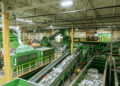










Recycling is struggling – but as the adage goes, crisis equals opportunity.
Since the modern environmental movement began, the emphasis in the world of materials management has been focused squarely on recycling. With the recent closure of key international recycling markets, it seems we’re considering everything possible to keep the system moving, including public education on contamination, finding alternative markets, slowing sorting lines, and eliminating materials from recycling streams. But one concept that hasn’t been discussed much is how we can collectively address the ever-increasing consumption of goods in the first place.
Now is the time to take a long, hard look at how we produce, consume, and maintain the goods around us. Akin to a 12-step program, to change our “habit,” we must first admit we have a problem. In this case, our habit is the ubiquitous make-take-waste lifestyle, and our problem is that most of us (solid waste districts, businesses, schools, multi-family residences, homeowners, and others) don’t work the waste hierarchy “program” in a way that maximizes highest and best use.
Instead of spending our resources equally across the 3Rs (reduce, reuse, recycle), we tend to focus them on recycling. We need to take a moment to collectively admit this to ourselves, then we can begin to “recover” by putting adequate resources into waste reduction and reuse, and working together to reduce consumption.
Tools to spark action
It may seem daunting to change our thinking and consider highest and best use, but it doesn’t have to be. There are many ways to embrace the highest Rs, and what follows are a few of the strategies you can add to your waste reduction toolbox.
Create a resource list. Scope out all of your region’s source reduction services (EPA P2 Resource Exchange, MEP Lean Manufacturing, etc.) and reuse-based organizations (clothing resale, building material reuse, food rescue, creative reuse, etc.) and create a reference document. It doesn’t matter if it’s a downloadable PDF, a crowd-sourced Google doc or an online database – it just needs to be available to the public and regularly updated. A great example of this is the city of Austin’s “Reuse Directory,” which is a searchable database funded through Austin Resource Recovery.
Host a community event. Once you know your resources, you can work with local groups to host community events where people can donate, swap, or fix their unwanted and broken goods. Examples of these activities include repair cafés (free meeting places where community members can come together to repair goods) and reuse fairs (seasonal events where residents can donate a range of readily reusable materials).
Embrace zero waste. If you help run a business, university or hospital, you may be interested in embracing zero waste in order to save money and reduce your footprint. The TRUE (Total Resource Use and Efficiency) certification system managed by the Green Building Certification Institute enables facilities to achieve zero waste goals. Their whole-systems approach encourages companies to revisit resource life cycles so that all non-reusable and non-recyclable packaging materials are redesigned or refused, by-products are reduced or eliminated, and outputs are either reused or recycled.
On the consumer side, there are many online resources that help individuals achieve personal zero waste goals. Guidance from websites such as The Minimalists (mindful consumption), Buy Me Once (well-made products that last a lifetime), and Zero Waste Ventures (education for zero waste journeyers) can help minimize consumption.
Support the reuse industry. This area needs considerable help, and it’s where state leadership is crucial. One state leading the pack is Minnesota. Minnesota Pollution Control Agency has shown its support for the industry in many ways, but here are a few of their initiatives that can be replicated by your state: Hold a statewide summit for industry stakeholders; support the launch of a statewide reuse support network (ReuseMN); offer a free, online materials exchange (MN Materials Exchange); conduct a study to measure the economic impacts of reuse. Efforts like these not only help connect, support and promote the activities of the reuse industry itself, they help increase the scope and impact of their waste reduction services.
Learn more about the topic. Another way to support waste reduction and reuse is to educate yourself about it. One way to do this is by reviewing the online “library” hosted by Reuse International, and another is by participating in ReuseConex, a biennial international reuse conference. This year’s ReuseConex, which will be held in Cincinnati Oct. 18-20, is bringing international thought leaders together to share best practices in university move-outs, the evolution of food rescue, corporate zero waste strategies, the role of repair in community development, and how reuse works to create jobs and address access and equity.
Moving the needle in multitude of ways
Now is the time for us, as an industry, to lead the way by engaging in meaningful waste reduction and reuse initiatives. There are so many ways for each of us to move the needle – whether that’s by creating resources that help the public connect with reuse organizations; coordinating a repair event at a local community center; getting your company certified as a zero waste facility; supporting waste reduction and reuse initiatives in your state; or by engaging with reuse industry thought leaders.
I hope you will join me in taking some time to consider the myriad ways we can better embrace waste reduction and reuse in all aspects of our lives.
MaryEllen Etienne has been working in the field of sustainable materials management for over 20 years, with an expertise in waste reduction and reuse. Among her many hats in the industry, she is the producer of ReuseConex, a partner in Zero Waste Ventures, and the author of “The Reuse Movement Toolkit.” MaryEllen was also involved in the development of TRUE. She can be contacted at [email protected].
The views and opinions expressed are those of the author and do not imply endorsement by Resource Recycling, Inc. If you have a subject you wish to cover in an op-ed, please send a short proposal to [email protected] for consideration.