











In the last two years, there has been a positive shift by previously recalcitrant brands to accept the importance of packaging recycling as part of total product life cycle and to commit to increasing packaging recyclability.
When As You Sow started conversations with several large consumer brands in 2012 about making more of their packaging recyclable, brands pushed back. Many were more focused on product lightweighting, material use reduction and elimination of manufacturing waste. These goals were relatively easy to propose and execute because using lighter and fewer materials usually saved money for the company.
Companies cited life-cycle assessments (LCAs) arguing that due to the reduced carbon footprint of making flexible plastics such as films and multi-material laminate pouches and sachets, these products could retain a net environmental benefit over competitors such as glass, paper, aluminum and other kinds of plastic packaging, even if all were eventually recycled.
While these materials indeed appear to generate fewer greenhouse gas emissions in their production process, it’s not yet clear that advantage holds through the entire product life cycle. LCAs often don’t include good data on the persistence or accumulation of plastics in the environment post-consumer, as the science in this area is still evolving. As a result, it’s not clear assessments can yet adequately assess risk if these materials end up in oceans and cause harm to birds and fish.
But what we do know is enough to make companies act. With recent scientific studies showing far greater deposition of plastic debris into oceans than previously thought, major consumer goods companies are starting to realize non-recyclable packaging can be a liability and brand risk. According to a study recently released by the Ocean Conservancy, more than 700 species in the ocean food chain have been affected by plastic debris, from the smallest plankton to the largest whales.
Danger looms for wildlife and people
Plastics break down into small indigestible pellets that animals mistake for food. Ingestion can result in death, as demonstrated in birds, turtles and whales. Plastics also have been shown to transfer hazardous chemicals to wildlife. Plastics absorb toxic substances such as PCBs, pesticides and metals from water, transferring them to the marine food web and potentially to human diets, increasing risk of adverse effects to wildlife and humans. A 2014 study by Trucost and the UN Environment Program estimated that plastic causes $13 billion in damage to marine ecosystems per year.
The same bright, shiny printing on sachets that attracts consumers in a store presents the specter of increased brand risk when littered on beaches and in waterways in developing economies. Pouches and other multi-material items are increasingly ending up in developing economies as land-based litter, which is then swept into rivers, streams and coastal areas.
Those realities seem to be having an impact on brand owners. We saw evidence of a shift in 2014 when consumer goods giant Procter & Gamble (P&G) committed to making 90 percent of its packaging recyclable by 2020 or ensure that programs are in place to recycle it. The announcement was made the same week a shareholder proposal on this topic initiated by As You Sow received substantial support at P&G’s annual meeting. This followed a pledge by Colgate-Palmolive to As You Sow to make all packaging recyclable in three of four operating divisions and to use 50 percent recycled content by 2020.
Furthermore, in January, Unilever agreed to make all plastic packaging reusable, compostable or recyclable by 2025. Its decision was notable for the strong executive-level endorsement, with CEO Paul Polman acknowledging the need to fund systemic solutions that “stop plastics entering our waterways in the first place.” He added, “We hope these commitments will encourage others in the industry to make collective progress towards ensuring that all of our plastic packaging is fully recyclable and recycled.” This is also noteworthy for its strong expression of prioritizing recycling, rather than hedging language that opens the door for waste-to-energy, which is neither the highest, best, nor most cost-effective use for these materials.
The Ocean Conservancy study noted above is a project of Trash Free Seas Alliance, whose members include Coca-Cola Co., Dow Chemical, P&G and Walmart. The study proposes investment strategies for creating collection and recycling systems in developing economies such as the Philippines, Indonesia and Vietnam, where much of the plastic deposition is occurring. We are glad to see this leadership, even though the willingness of brands to share in the costs of these solutions is unclear.
Processing solutions still needed
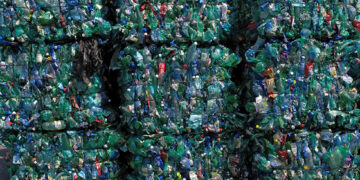
There are several initiatives underway to study whether flexible film packaging can be efficiently collected and mechanically recycled. The Materials Recovery for the Future project in the U.S. and Reflex project in the U.K. demonstrated it is technically possible to sort post-consumer flexible packaging, but infrared sorting technology plays a key role and many materials recovery facilities would need upgrades to process these materials. The bigger challenge is a cost-effective technology that could compatibilize or mechanically separate different resins; several projects are underway, but none we are aware of are close to commercial scale.
This represents good progress for the daunting task of stopping the massive leakage of plastic waste into oceans, but challenges remain. How soon can a recycling technology be put in place to capture and recycle flexible films? Should brands pay for collection in the meantime and hold these materials in storage until there’s a solution to keep them from leaking into the environment? Will this type of packaging itself become obsolete and disrupted by more advanced materials before a solution is found? How will leading-edge brands convince peers and competitors to get on board, short of mandates, and reduce the prospect of free riders?
The uncertainty around these questions and the spiraling projected growth rate of plastics suggests that brands should also look for ways to avoid generating single-use, low-value plastics through product redesign, development and promotion of reusables and refillables, and motivating consumers to change behavior.
Conrad MacKerron is senior vice president at As You Sow, with more than a decade of experience engaging publicly traded companies on behalf of shareholders to find ways to increase recycling and recyclability of packaging. He is author of Waste and Opportunity 2015: Environmental Progress and Challenges in Food, Beverage and Consumer Goods Packaging.
The views and opinions expressed are those of the author and do not imply endorsement by Resource Recycling, Inc. If you have a subject you wish to cover in an op-ed, please send a short proposal to [email protected] for consideration.