













Since being introduced to the market, single-use beverage containers have caused much debate – both in the beverage industry and among politicians and the public. A simple question sits at the center of the arguing: What’s the most efficient way to collect beverage containers for high-quality recycling?
Though there are many who continue to argue that these containers should be recovered as part of existing curbside programs, the last year has seen unprecedented interest in deposit initiatives, with several European countries moving forward with these systems as a complement to their existing collection models.
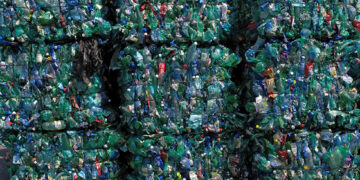
It’s hard to pinpoint one catalyst for this renewed interest, but the growing marine litter problem has certainly played a part. According to the U.K.-based Marine Conservation Society’s latest Great British Beach Clean report, the number of beverage containers found on beaches rose significantly between 2014 and 2015 – plastic drink bottles on shorelines increased by over 43 percent and metal cans by almost 29 percent. One simply has to do a Google search to see how this has affected marine life. There are thousands of images showing containers littering pristine waterways and inside the stomachs of young birds – each photo a sad illustration of society’s failure to properly manage its waste.
Another catalyst for the interest in deposit strategies has been the recognition among some producers that many beverages are consumed and discarded away from home where recycling services are not available. For producers struggling to meet high recycling targets, the existing “green dot” style programs, which focus on single-family dwellings, are proving ineffective. Stagnant collection rates and increasing contamination are resulting in even lower recycling rates, and producers are finding that they have little control over the costs since they have to work with municipal authorities and the waste industry.
Action across the globe
The latest country to adopt a deposit-return system for single-use cans and bottles was Lithuania, a relatively small country in the northern part of Europe with a population of about 3 million. Introduced this February by the beverage industry, the deposit system covers nearly all beverage containers, and it is 100 percent industry-operated in partnership with retailers that offer both automated and manual return options for consumers. Besides seeing the system as a way to increase low recycling rates, the beer and water sectors saw deposits as an alternative to paying extended producer responsibility (EPR) fees, which were financing a system that was not performing well. In EPR systems, brand owners finance and/or manage systems for recovering their products at end of life.
The autonomous region of Valencia in Spain has also made deposit return a priority. Like most areas in Spain, Valencia has a major litter problem. According to Valencia’s Regional Secretary for the Environment and Climate Change, 5 million single-use beverage containers end up in landfills or are littered in Valencia each day. It is annually costing municipalities there about 40 million euros (around $44.4 million) to clean up litter, and that figure does not include social and environmental costs.
Valencia also reports exceptionally low recycling rates (around 30 percent) from the industry-financed green dot system. In an attempt to address these issues, on April 20, 2016, the Valencian government announced plans to implement a refundable deposit of 10 euro cents (around 11 U.S. cents) on the purchase of all water, beer, soda, and juice containers in 2018.
North of Valencia is the Catalonia region with a population of 7.5 million. Following a successful pilot project in 2013, Catalonia is also moving forward on its plan to design and implement a modern deposit return system. Catalonia’s plan has had the support of a number of companies and organizations, including small and medium retailers that view deposits as an opportunity to gain additional revenue from handing fees. Recycling companies in Spain as well as some distributors have also endorsed the new system.
Even the U.K. is beginning to reconsider mandatory deposits, with recent political campaign platforms calling for deposit programs in Scotland (SNP, Liberal Democrats and Greens) and Wales (Conservatives, Liberal Democrats) during the spring elections.
Finally, the trend has also hit Australia. Despite strong opposition from the beverage industry, New South Wales (the most populated Aussie state, with 7.5 million residents) recently announced that it would be adopting a deposit of 10 Australian cents (around 7 U.S. cents) on containers starting in July of next year. The program is expected to double the state’s beverage container recycling rate to roughly 80 percent. Once NSW’s program is in place, the government in Queensland, the state closest to the Great Barrier Reef, is also expected to adopt the deposit concept. This would allow deposits to reach an additional 4.8 million people.
Closer to the U.S., the province Quebec in Canada is on the verge of expanding its existing program to include water bottles as well as glass wine and spirit containers, which have become extremely problematic for recycling processors.
And what about municipalities?
In all of the jurisdictions mentioned above, deposit initiatives are being introduced as systems that work in tandem with existing municipal recycling programs. One of the key arguments put forward by opponents to deposits is that they will harm municipalities by taking away recyclables with the most value from the municipal recycling stream, resulting in a reduction of the cost-effectiveness of municipal curbside programs.
Last month, CM Consulting and Reloop released research summarizing 20 studies that attempted to measure deposit systems’ cost impact on municipalities. Despite being different in scope and location, all 20 studies tell the same story: container deposit systems result in net savings for municipalities, even after taking into account the loss of material revenues from valuable beverage cans.
With the recent release of the European Commission’s Circular Economy Package, packaging producers in Europe are facing growing pressure to not only manage their waste properly, but to also pay for the management systems.
In Europe, the days of sharing this responsibility with municipalities is clearly a thing of the past. Producers will be responsible for 100 percent of the costs of managing their waste, and at the same time they will have to reach higher recycling targets (versus collection targets). Deposit systems offer a logical solution for the beverage sector.
Clarissa Morawski is based in Barcelona and serves as the managing director of the Reloop Platform, which brings together industry, government, and non-governmental organizations in Europe to form a network for advances in policy that create enabling system conditions for circularity across the European economy. Clarissa is also principal of Canada-based CM Consulting Inc.