



The US Department of Energy (DOE) has launched a collaboration with Amazon to study new approaches for recovering critical materials from discarded textiles and end-of-life electronics, with a focus on domestic supply chains.
The new initiative brings together DOE’s Ames National Laboratory and the Critical Materials Innovation Hub (CMI) with Amazon’s artificial intelligence capabilities and supply chain expertise. The partners will examine methods to recover materials used in batteries and electronics, including graphite and gallium.
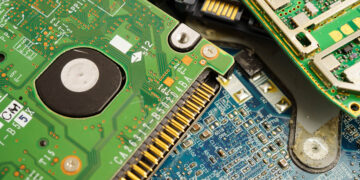
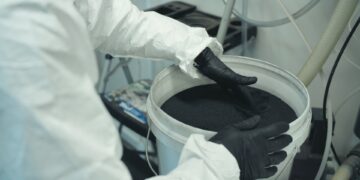
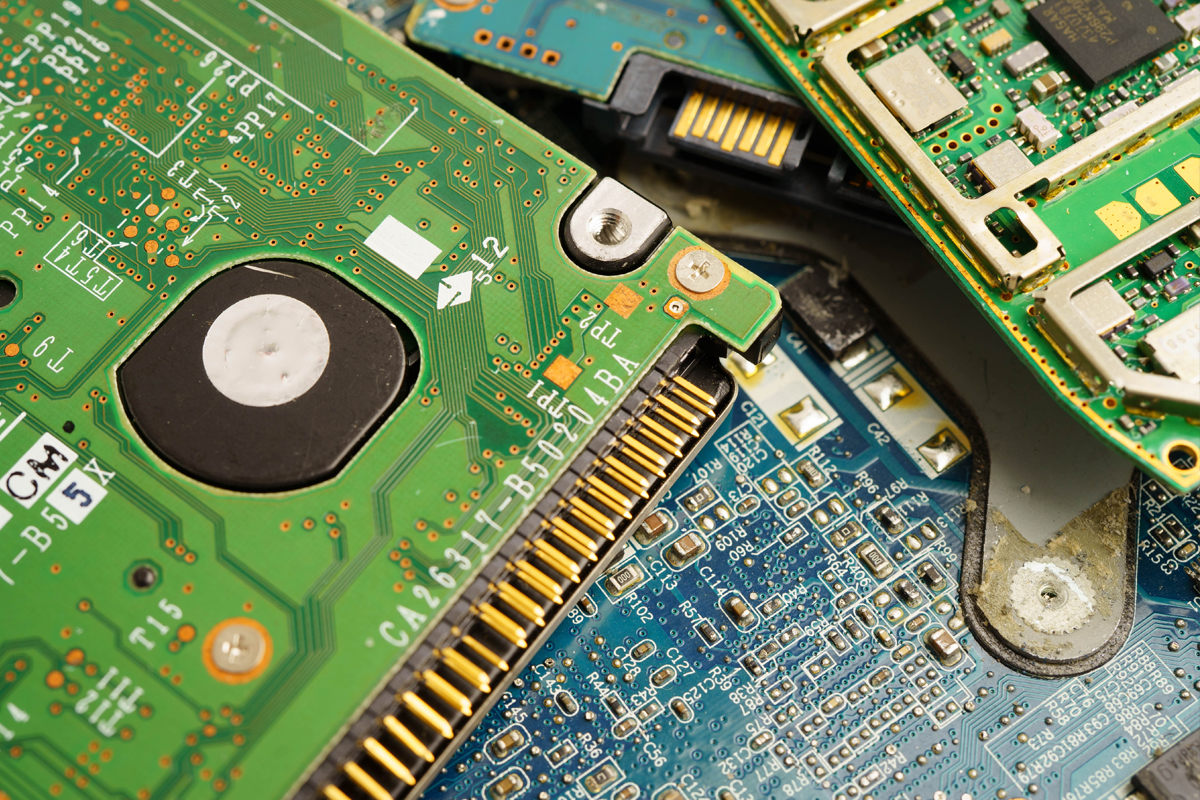
DOE officials said the work will explore whether post-consumer textiles can be converted into battery-grade graphite, by processing carbon-rich fibers into graphite suitable for lithium-ion batteries, while also examining the technical and economic feasibility of recovering critical minerals from end-of-life IT hardware.
“At scale, the recovery of critical minerals from end-of-life technologies and textile waste has the potential to transform our domestic critical materials supply chains,” said Audrey Robertson, assistant secretary of energy for the Office of Critical Materials and Energy Innovation.
Robertson said the collaboration supports efforts to reduce reliance on foreign imports and strengthen national security.
The DOE said Amazon will contribute artificial intelligence tools and supply chain capabilities, while the Ames lab and CMI will provide materials science expertise and research capacity. The work builds on ongoing efforts to identify new sources of critical materials from discarded products and industrial streams.
“This is an excellent match for Ames National Laboratory’s deep expertise in materials science,” said Karl Mueller, director of Ames National Laboratory. “For decades, Ames Lab has led the nation in metals refining, purification, and critical materials research and applying that strength to real-world challenges.”
CMI Director Tom Lograsso said the project is intended to move research toward practical applications. “CMI’s mission is to move breakthrough materials technologies from the laboratory into real-world applications on timelines that meet industry’s needs,” Lograsso said.
The collaboration includes work with Amazon Web Services (AWS) teams to assess recovery pathways for materials contained in IT equipment. According to the DOE, AWS will apply its expertise in “physical AI,” or AI deployed in real-world industrial operations, along with its supply chain capabilities, while CMI contributes its capabilities in critical minerals recovery.
“We are excited to bring the full depth and breadth of Amazon AI – including Amazon Nova – and our science capabilities to this collaboration,” said Kommy Weldemariam, chief scientist for sustainability and AI at Amazon. “Together with Ames National Laboratory and CMI, we are advancing a new frontier in critical materials circularity, from converting discarded textiles into battery-grade graphite to recovering critical minerals from IT hardware.”
The DOE said the effort aligns with its Genesis Mission goal of securing critical materials from discarded resources. The work will draw on CMI’s network of partners to support research and potential pathways toward commercial applications.
E-Scrap News reached out to Amazon regarding the timeline for the research and when the pilot-scale work might begin, but had received no response by the time this article went to press.