



Closed Loop Partners has spent the past two years building a coherent buy-and-build strategy within the circular economy space. The acquisition of Sutter Metals, announced March 31, marks the New York firm’s entry into metals and critical minerals processing, and it signals something broader about where PE capital is heading across the electronics end-of-life sector.
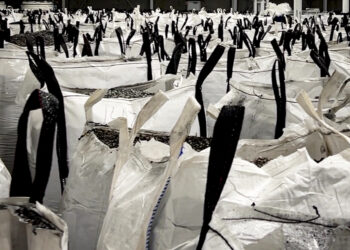
Sutter Metals, based in Tacoma, Washington, collects, sorts, and processes high-value nonferrous and ferrous metals from aerospace, automotive, and electronics generators, delivering feedstock to mills, foundries, and brokers.
Closed Loop likely targeted Sutter for reasons familiar to PE platform builders. The company is a founder-led regional player, with customer relationships built over more than a decade.
The timing reflects broader market conditions. Shifting global supply chains and a regulatory environment increasingly hostile to offshore mineral dependence have made domestic metals processors strategically attractive in a way they were not five years ago. NIST data cited in Closed Loop’s announcement shows that 29% of nonferrous metals and 54% of ferrous metals still end up in landfills, a gap that represents both a supply problem for critical industries and a clear investment thesis.
Building across the full stack
The Sutter acquisition is the latest in a sequence that began with electronics and has now extended into metals recovery.
In November 2023, Closed Loop acquired a majority stake in Sage Sustainable Electronics, a Columbus, Ohio ITAD provider processing nearly one million assets per year for Fortune 100 clients across finance, healthcare, and defense, according to the company. Bolt-on deals followed quickly.
In October 2024, Sage acquired Relectro, adding repair and refurbishment capabilities. In February 2025, Sage acquired Cascade Asset Management, making the combined entity one of the largest pure-play ITAD providers in the country, with eight facilities and capacity of 1.5 million assets annually, the company said. In August 2025, Closed Loop separately acquired Agri-Cycle, a commercial organics management company operating across 14 states, applying the same buy-and-build logic to a different material stream.
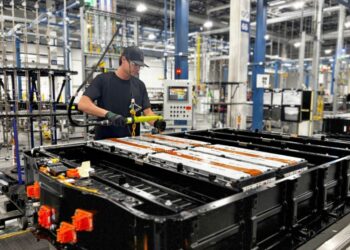
Sutter Metals extends the portfolio in a direction directly relevant to electronics recovery. Closed Loop now controls assets spanning device collection, repair, refurbishment, IT disposition, and metals processing. Once a device has exhausted its reuse value, the metals recovery pathway has historically required selling to a downstream processor operating at arm’s length. By pairing Sage’s electronics processing capabilities with a metals platform, Closed Loop creates the conditions for vertical integration across that boundary, not necessarily in the near term, but structurally.
A cross-material thesis
While most PE acquirers active in ITAD are still building within a single vertical, a few PE firms are building across them, with the explicit thesis that the real margin lies in controlling material flows from enterprise generator through disposition through commodity recovery. Closed Loop appears to be the most aggressive of them all.
That distinguishes the firm from players like Recognize, which acquired Sprout in January 2025, making it a single-vertical play. Closed Loop, backed by a recent strategic investment from Capricorn Investment Group, appears to have both the balance sheet and stated ambition to keep moving across material categories.
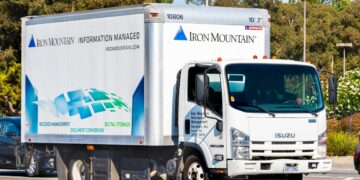
The Sutter acquisition is also another indication that metals and urban mining are moving up the PE priority list more broadly. Domestic supply chain pressure, coupled with critical mineral policy, and the volume of metals embedded in retiring data center and enterprise IT equipment are converging in a way that did not exist at this scale previously. Sutter’s Pacific Northwest location puts it in proximity to major aerospace generators and positions it well for West Coast data center decommissioning flows, a segment that Iron Mountain’s CFO Barry Hytinen estimated at an $8 billion total addressable market in mid-2025.
The Sutter deal adds to a pattern that has been building for several years. PE capital is increasingly assembling platforms that span the material lifecycle, with the goal of owning margin at each transition point.
For industry stakeholders, two implications follow. Valuations for well-positioned regional operators will continue to rise, particularly those with strong generator relationships and clean, sortable material streams. At the same time, the opportunity for independent operators to grow organically before platform consolidators arrive is narrowing.
Acquisitions are already reshaping significant portions of the ITAD market, with PE-backed platforms absorbing processors from coast to coast, with ITAD capital now looking downstream.