






Resource Recycling
  • The Latest
  • Analysis
    • All
    • Certification Scorecard
    • Industry Announcements
    • Opinion

    Leveraging materials testing for procurement efficiency

    Server resale values surge in AI-driven markets

    Certification scorecard for week of Jan. 19, 2026

    From CES to the shredder: What 2026 PCs mean for ITAD

    Server resale values surge in AI-driven markets

    Certification scorecard for week of Jan. 12, 2026

    Industry announcements for January 2026

    Certification scorecard for Dec. 18-30, 2025

    Certification scorecard for Dec. 18, 2025

    Industry announcements for the week of Dec. 15

    Certification scorecard for December 10, 2025

  • Conferences
  • Publications

    Other Topics

    Textiles
    Organics
    Packaging
    Glass
    Brand Owners

    Metals
    Technology
    Research
    Markets
    Grant Watch

    All Topics

Subscribe
No Result
View All Result
Resource Recycling
  • The Latest
  • Analysis
    • All
    • Certification Scorecard
    • Industry Announcements
    • Opinion

    Leveraging materials testing for procurement efficiency

    Server resale values surge in AI-driven markets

    Certification scorecard for week of Jan. 19, 2026

    From CES to the shredder: What 2026 PCs mean for ITAD

    Server resale values surge in AI-driven markets

    Certification scorecard for week of Jan. 12, 2026

    Industry announcements for January 2026

    Certification scorecard for Dec. 18-30, 2025

    Certification scorecard for Dec. 18, 2025

    Industry announcements for the week of Dec. 15

    Certification scorecard for December 10, 2025

  • Conferences
  • Publications

    Other Topics

    Textiles
    Organics
    Packaging
    Glass
    Brand Owners

    Metals
    Technology
    Research
    Markets
    Grant Watch

    All Topics

Subscribe
No Result
View All Result
Resource Recycling
No Result
View All Result
Home Analysis

Leveraging materials testing for procurement efficiency

byDr. Pradyumna Gupta
January 23, 2026
in Analysis, Opinion, Plastics

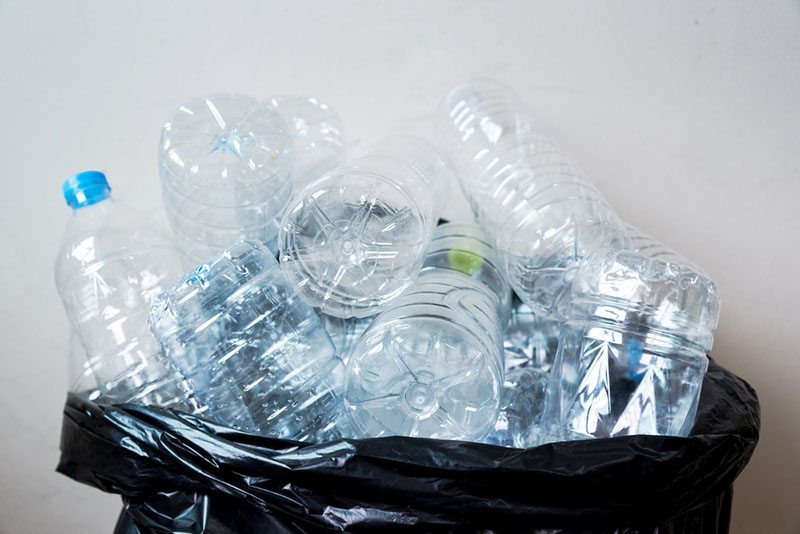
Konstantin Kolosov / Shutterstock

When municipalities, manufacturers, and procurement teams talk about recycled plastics, the conversation often centers on meeting sustainability targets. Increasing recycled content, reducing environmental impact, and complying with extended producer responsibility regulations are all vital goals in the drive toward a circular economy. Yet there is another imperative that is less frequently discussed and potentially just as consequential: performance risk.

Understanding recycled plastics solely through a sustainability lens is no longer sufficient. Today’s marketplace demands that recycled materials not only carry a positive environmental story but also deliver reliable, predictable performance. This is where testing comes in, not just as a compliance checkbox, but as a strategic budget protection tool.

Unlike virgin resins, which are produced under tightly controlled feedstock chemistry and melt conditions, recycled streams can vary widely based on their source, collection method, and preprocessing history. Variability in feedstock, thermal degradation during previous life cycles, contamination from paints or adhesives, and inconsistent additive profiles can all influence mechanical performance, processing behavior, and long-term durability. 

In real-world procurement, these factors translate into budget risk, from increased scrap rates and production downtime to premature product failures and costly warranty claims.

Testing data provide support for decision-making

Testing is not limited to pass-or-fail decisions. When used strategically, it becomes a decision support system across procurement, design, and manufacturing.

Procurement teams can compare suppliers using quantifiable performance data rather than price alone. Specifications can be written around functional requirements that align with real use conditions. Qualification loops can track the performance of recycled material over time. Pricing and risk sharing can be negotiated based on verified metrics rather than assumptions.

Benchmarking is a key element in this approach. Establishing baseline performance requirements for each application and repeatedly testing against those benchmarks transforms materials selection into a disciplined, evidence-based process.

Testing can guard against hidden costs

Reducing production losses is one of the most immediate benefits of testing. Testing melt flow rate, tensile strength, and environmental stress cracking resistance helps predict whether recycled batches will remain within acceptable processing windows, and help avoid unexpected softness or stiffness in blow-molded recycled HDPE, for example. This information allows operations teams to adjust machine settings or reject problematic material before costly downtime occurs.

Avoiding premature failures is equally important. A municipality specifying recycled-plastic benches for public parks may focus on the recycled content percentage, but cracking under thermal cycling or prolonged loading can quickly drive up replacement costs. Mechanical testing, combined with accelerated aging simulations, helps ensure that materials will support long-term service without frequent replacement.

Testing also helps lower warranty and aftermarket costs. In applications such as consumer packaging or automotive interiors, recycled plastics must meet dimensional and stress requirements over time. Properties such as moisture uptake or thermal expansion can cause warping or part rejection. Comprehensive testing protocols provide early warnings, protecting future warranty obligations.

Real-world examples: When testing prevented losses

The following examples illustrate how testing links material performance directly to cost control and public accountability.

In one packaging application, early mechanical and thermal degradation testing revealed that recycled polypropylene lost tensile strength after a regrind cycle. Adjustments to blend ratios and stabilizer use restored performance and prevented downstream failures.

In another case, a transit authority evaluating recycled plastic traffic posts introduced impact testing and accelerated ultraviolet exposure. Materials that met recycled-content targets but failed durability requirements were eliminated before deployment to avoid repeated replacement costs.

Testing standards provide a common language for quality

Testing delivers the greatest value when anchored to recognized standards. Methods such as ASTM D638 for tensile properties, ASTM D790 for flexural behavior, and ISO 527 for plastics testing provide consistent frameworks for supplier comparisons and batch qualification.

Supplementing baseline testing with accelerated aging, environmental stress cracking, and thermal evaluation creates a more complete picture of material risk. When testing data supports sustainability claims, organizations gain both regulatory confidence and market credibility.

A future where performance supports sustainability

As recycled content mandates expand, organizations must ensure that sustainability goals do not introduce hidden costs. Recycled plastics should be treated as engineered materials with defined performance requirements, not simply as environmentally preferred options.

Testing enables recycled materials to compete with virgin resins on reliability, durability, and consistency. When performance is validated, sustainability becomes economically viable rather than financially risky.

The future of recycling depends on trust. Trust that recycled materials will perform as expected. Trust that sustainability initiatives will not compromise safety or durability. Trust that budgets will remain protected.

That trust is built through testing. By translating variability into measurable data and linking performance to real-world use, testing allows recycled plastics to meet both environmental and economic expectations. In this way, testing becomes the quiet force that enables circularity to scale responsibly.


Tags: PackagingResearch
TweetShare
Dr. Pradyumna Gupta

Dr. Pradyumna Gupta

Dr. Pradyumna (Prady) Gupta is the Founder and Chief Scientist of Infinita Lab and Infinita Materials, where he leads pioneering work in materials characterization, reliability engineering, and advanced manufacturing. With more than two decades of experience spanning semiconductors, electric mobility, and aerospace systems, he focuses on bridging material science with practical reliability needs. Dr. Gupta’s work centers on enabling high-performance, safe, and sustainable material architectures for next-generation technologies.

Related Posts

Robot pilot targets legacy parts to help supply defense

Robot pilot targets legacy parts to help supply defense

byScott Snowden
December 29, 2025

Although chip availability has improved since the worst shortages earlier in the decade, Tuurny says demand for legacy electronics remains...

Chemical bonds

Alberta catalyst discovery targets hydrogen and plastics

byScott Snowden
December 10, 2025

A chance discovery inside a University of Alberta laboratory has developed into a Canadian cleantech project that aims to reshape...

Beauty packaging NGO looks to expand

Beauty packaging NGO looks to expand

byAntoinette Smith
December 2, 2025

In its efforts to reduce beauty packaging waste and increase industry accountability, Pact Collective is seeking to add to its more than...

Global recycling patent trends may reflect legislative push

Global recycling patent trends may reflect legislative push

byAntoinette Smith
November 25, 2025

Patent applications for chemical recycling technologies have reached a record high globally with government initiatives among the factors driving innovation,...

Study maps barriers to firms’ supply chain climate goals

byAntoinette Smith
October 14, 2025

Publicly articulating clear sustainability goals helps ensure company follow-through, according to an annual supply chain study from the Massachusetts Institute...

Washington’s residential paper and packaging EPR program

byNora Goldstein
September 23, 2025

The Washington Recycling Reform Act, passed by the legislature in 2025, is designed to improve the state’s residential recycling system....

Load More
Next Post

BioCycle shifts leadership as Paula Luu takes the reins

More Posts

Haulers continue to see recycling revenue drops

GFL Environmental relocates HQ to Miami Beach

January 21, 2026
Chinese processing group details goals for US visit

AMP lays out vision of next-generation, AI-driven MRFs

July 24, 2024
New brand-led recycling group looks to work with Congress

New brand-led recycling group looks to work with Congress

January 20, 2026

Alpla decries ‘painful impact’ of recycling market pressures

January 19, 2026
CalRecycle withdraws proposed regs for SB 54

CalRecycle withdraws proposed regs for SB 54

January 12, 2026
Server resale values surge in AI-driven markets

Server resale values surge in AI-driven markets

January 22, 2026
US Plastics Pact announces leadership change

US Plastics Pact announces leadership change

January 21, 2026

Aduro reports losses, will pick site for demo plant by end Jan

January 16, 2026

New Jersey passes bill on single-use service items

January 14, 2026

CARE launches carpet fiber ID device to aid recyclers

January 14, 2026
Load More

About & Publications

About Us

Staff

Archive

Magazine

Work With Us

Advertise
Jobs
Contact
Terms and Privacy

Newsletter

Get the latest recycling news and analysis delivered to your inbox every week. Stay ahead on industry trends, policy updates, and insights from programs, processors, and innovators.

Subscribe

Welcome Back!

Login to your account below

Forgotten Password?

Retrieve your password

Please enter your username or email address to reset your password.

Log In

Add New Playlist

No Result
View All Result
  • The Latest
  • Analysis
  • Recycling
  • E-Scrap
  • Plastics
  • Policy Now
  • Conferences
    • E-Scrap Conference
    • Plastics Recycling Conference
    • Resource Recycling Conference
    • Textiles Recovery Summit
  • Magazine
  • About Us
  • Advertise
  • Archive
  • Jobs
  • Staff
Subscribe
This website uses cookies. By continuing to use this website you are giving consent to cookies being used. Visit our Privacy and Cookie Policy.