



Advertisement Header Ad
Resource Recycling
  • The Latest
  • Analysis
    • All
    • Certification Scorecard
    • Industry Announcements
    • Opinion

    Industry Announcements for Week of December 8

    Certification Scorecard for December 3, 2025

    Industry Announcements for Week of December 1

    News from Dynamic Lifecycle Innovations, Precision E-Cycle

    News from Northeast Recycling Council, Plastipak and more

    News from Northeast Recycling Council, Sortera Technologies and more

    News from MKV Polymers, Metallium Ltd. and more

    Certification Scorecard for November 19, 2025

    News from American Beverage, Inteplast Group and more

  • Conferences
  • Publications

    Other Topics

    Textiles
    Organics
    Packaging
    Glass
    Brand Owners

    Metals
    Technology
    Research
    Markets
    Grant Watch

    All Topics

Subscribe
No Result
View All Result
Resource Recycling
  • The Latest
  • Analysis
    • All
    • Certification Scorecard
    • Industry Announcements
    • Opinion

    Industry Announcements for Week of December 8

    Certification Scorecard for December 3, 2025

    Industry Announcements for Week of December 1

    News from Dynamic Lifecycle Innovations, Precision E-Cycle

    News from Northeast Recycling Council, Plastipak and more

    News from Northeast Recycling Council, Sortera Technologies and more

    News from MKV Polymers, Metallium Ltd. and more

    Certification Scorecard for November 19, 2025

    News from American Beverage, Inteplast Group and more

  • Conferences
  • Publications

    Other Topics

    Textiles
    Organics
    Packaging
    Glass
    Brand Owners

    Metals
    Technology
    Research
    Markets
    Grant Watch

    All Topics

Subscribe
No Result
View All Result
Resource Recycling
No Result
View All Result
Home Recycling

BC leaders reflect on three decades of EPR

Marissa HeffernanbyMarissa Heffernan
June 25, 2024
in Recycling
Share on XLinkedin
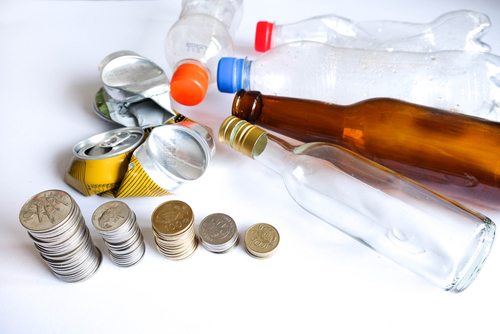
The June 14 webinar “EPR in British Columbia: A Timeline of Success and Challenge Past, Present, Future” brought together nine speakers with long experience in extended producer responsibility in the province. | Vipada Kanajod/Shutterstock

How did a law intended to stop can-tabs litter in British Columbia lead to today’s expansive extended producer responsibility laws? Those involved in its evolution traced the path in a webinar hosted by the Coast Waste Management Association. 

The June 14 webinar, “EPR in British Columbia: A Timeline of Success and Challenge Past, Present, Future,” brought together nine speakers to share their personal experiences and memories. Many of the speakers were already working in the industry when beverage container deposits started in the early 1970s and recalled the “paint wars” of 1994, when BC enacted a law making paint the first EPR-regulated product in North America. 

Mannie Cheung, vice president of operations at Product Care Association of Canada, said the paint industry went through something akin to the five stages of grief over that first EPR program, from anger and hiring lawyers to fight it in 1994 to now, 30 years later, “really embracing the EPR concept.” 

EPR has sparked several innovations, he said, such as an automated paint can opener, and helped lay the groundwork of collection infrastructure systems. 

In 1994 there were eight sites to drop off household hazardous waste in BC, Cheung added, and in 2023 there were 228 for paint and 110 for HHW, showing the popularity and success of the program. 

Colin McKean, now the executive director of the Canadian Battery Association, recalled the tension of the paint wars and commended government officials who stood strong and stuck to their regulation plans. 

“It has its issues, nothing is perfect, but it does have the highest recovery for the lowest cost,” he said of the BC model of EPR, which allows producers the flexibility to reach government-set targets in the way they think would work best. “The BC model is considered the best in Canada,” McKean said. 

“It’s stood the test of time,” he added, pointing to its resilience. 

The second EPR program was initially called the Post Consumer Regulation Stewardship Program and covered pesticides, solvents and stale gas, McKean said. Over time, that morphed into the current regulation.

Cindy Coutts, president and CEO of Encorp Pacific in Canada, more commonly known as Return-It, said the model of results-based regulation is very important. 

“Giving us that flexibility allows us to keep the system efficient and cost effective,” she said, ensuring a fair playing field for all producers and the kind of market-driven innovation that Cheung mentioned. 

For example, the government regulated recovery rate for covered beverage containers is 75%. Coutts said in 2023, the rate was 79.6%, and Return-It has a planned target of 83.6% in 2026. 

“How are we going to do it? More convenience,” she said. “Also technology.” 

Coutts had data to back up the success of a flexible, industry-lead DRS: By 1999, Return-It had collected 2.1 billion bottles. A decade later, that had risen to a collective 10.3 billion containers in 2009, then 20.45 billion in 2019. By 2023, the to-date total has hit 26 billion. 

Lyndsey Chauhan, with Recycle BC, recalled that the organization launched in 2012 after paper and packaging was added to BC’s EPR program in 2011. It was called MultiMaterial BC then – it rebranded in 2017. 

Paper and packaging EPR started with some “trepidation at the beginning of program launch about what this means for the waste industry,” Chauhan said, but now it’s a program that sets the standard. 

Between 2014 and 2023, Recycle BC and partner organizations collected 1.98 million tons of material, and producers have paid $1 billion into the program since 2014. Recycle BC continues to make investments, including building a new audit center, and adding new partners, Chauhan said. 

“A challenge remains: we can’t manage what we don’t collect,” she added.

Kris Ord of KO Consulting used to work for provincial government and said BC was a key leader in 2009 when a nationwide action plan for EPR was developed. While it’s often hard being a leader, as everyone is looking at you, she said BC was the furthest along and has one of the best EPR models. 

“A national plan really helps lagging jurisdictions,” she said. “Nobody – especially politicians – wants to be the last jurisdiction to do something.” 

Michael Zarbl, Major Appliance Recycling Roundtable executive director and chair of the Stewardship Agencies of BC, echoed that BC has a “great model and seems to be modest about saying so.” 

“We’re leading the way in BC,” he said. “We’re doing stuff that other people just aren’t doing.”

There’s strong coordination between stewardship groups for different materials, he said, which leads to better economies of scale, and they also partner on things like remote community material removal or post-disaster cleanups. 

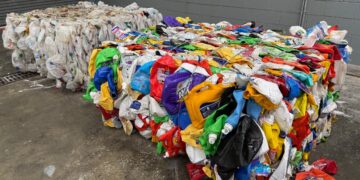
As for remaining challenges, equitable access in rural areas and properly managing flexible plastics are top of mind for Tera Grady, manager of solid waste for the Cariboo Regional District. She said that despite the systems in place for flexibles, much of it still ends up in landfill, where it tends to blow around and cause problems. 

Sheila Molloy, Coast Waste Management Association executive director, added that initially the webinar was going to include a segment on times when EPR is not the ideal solution, but instead a future webinar will cover the topic. 

Looking to the future, Isabelle Faucher, Carton Council of Canada managing director, said the trend is “everything, everywhere, all at once.” 

Most parts of Canada are shifting from shared to full producer responsibility for various materials, EPR for paper and packaging comes online in most, if not all, provinces and territories by 2026, and in tandem covered material lists are expanding to include materials such as compostable packaging and to hold more generators of material responsible, she said. 

A downside is that as programs harmonize, there is a loss of granular performance data, Faucher said. For example, the Carton Council used to find data that broke out cartons specifically, but those materials are now often lumped into a “fiber” category, she said, complicating attempts to track progress in recycling.  

McKean added that as EPR programs evolve further, he’d like to see them stay results-based instead of prescriptive, include more products and have more collaboration with industry on setting definitions. 

Faucher said she was also interested to see if Canadian policymakers will look south to California for any inspiration, especially around source reduction and 100% recyclable or compostable requirements, the idea of responsible end markets and eco-modulation of fees. 

“Canada has not gone there yet,” she said.  

A version of this story appeared in Plastics Recycling Update on June 20.

Tags: CanadaEPRIndustry Groups
Marissa Heffernan

Marissa Heffernan

Marissa Heffernan worked at Resource Recycling from January 2022 through June 2025, first as staff reporter and then as associate editor. Marissa Heffernan started working for Resource Recycling in January 2022 after spending several years as a reporter at a daily newspaper in Southwest Washington. After developing a special focus on recycling policy, they were also the editor of the monthly newsletter Policy Now.

Related Posts

electronic vapes

Vape fires cost waste, recycling sector $2.5B yearly

byScott Snowden
December 9, 2025

Waste and recycling operators are heading into another year of elevated fire risk as lithium-ion batteries from electronics and disposable...

Colorado

Colorado NGO, recycler partner on innovation

byAntoinette Smith
December 2, 2025

Direct Polymers, the state's largest plastics processor, will leverage a new innovation hub to help accelerate development of products made...

Beauty packaging NGO looks to expand

Beauty packaging NGO looks to expand

byAntoinette Smith
December 2, 2025

In its efforts to reduce beauty packaging waste and increase industry accountability, Pact Collective is seeking to add to its more than...

Plastics Pact supports chemical recycling as complementary

Plastics Pact supports chemical recycling as complementary

byAntoinette Smith
November 19, 2025

To help inform policy and develop industry-led best practices, the US Plastics Pact published a position paper on Wednesday regarding...

Canada PROs unite to align packaging design

Canada PROs unite to align packaging design

byAntoinette Smith
November 18, 2025

Five Canadian producer responsibility organizations are joining forces to provide clear, consistent guidelines to make packaging design recyclable, with plastics...

Emerging US EPR programs spark harmonization talks

Emerging US EPR programs spark harmonization talks

byStefanie Valentic
November 18, 2025

Extended producer responsibility legislation has rapidly expanded across the United States over the past two years, with seven states enacting...

Load More
Next Post

Renewal projects receive $50,000 each in DOE competition

More Posts

Analysis: Q3 earnings confirm new industry priorities

Analysis: Q3 earnings confirm new industry priorities

November 12, 2025
Iron Mountain raises ITAD guidance on strong growth

Iron Mountain raises ITAD guidance on strong growth

November 12, 2025
ERCC outlines shift toward convenience benchmarks

ERCC outlines shift toward convenience benchmarks

November 12, 2025
Analysis: EU softens ESG rules as compliance pressure builds for US

Analysis: EU softens ESG rules as compliance pressure builds for US

November 19, 2025
Sector holds wide gaps in environmental standards

Sector holds wide gaps in environmental standards

November 19, 2025
From crawl to run: a clear roadmap for ITAD ESG

From crawl to run: a clear roadmap for ITAD ESG

November 19, 2025
New entrepreneurs bring renewed energy to e-cycling

New entrepreneurs bring renewed energy to e-cycling

November 19, 2025
The Re:Source Podcast Episode 1: E-Scrap look-back and 2026 outlook

The Re:Source Podcast Episode 1: E-Scrap look-back and 2026 outlook

November 21, 2025
ERI and ReElement partner on rare earth magnet recovery

ERI and ReElement partner on rare earth magnet recovery

November 26, 2025
Cyber risks confront ITAD work, contracts, coverage

Cyber risks confront ITAD work, contracts, coverage

November 26, 2025
Load More

About & Publications

About Us

Staff

Archive

Magazine

Work With Us

Advertise
Jobs
Contact
Terms and Privacy

Newsletter

Get the latest recycling news and analysis delivered to your inbox every week. Stay ahead on industry trends, policy updates, and insights from programs, processors, and innovators.

Subscribe

Welcome Back!

Login to your account below

Forgotten Password?

Retrieve your password

Please enter your username or email address to reset your password.

Log In

Add New Playlist

No Result
View All Result
  • The Latest
  • Analysis
  • Recycling
  • E-Scrap
  • Plastics
  • Conferences
    • E-Scrap Conference
    • Plastics Recycling Conference
    • Resource Recycling Conference
    • Textiles Recovery Summit
  • Magazine
  • About Us
  • Advertise
  • Archive
  • Jobs
  • Staff
Subscribe
This website uses cookies. By continuing to use this website you are giving consent to cookies being used. Visit our Privacy and Cookie Policy.