RRS

RRS

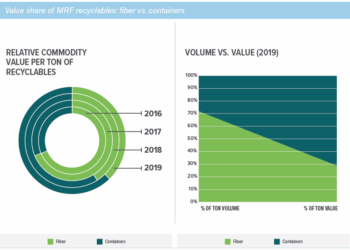
Data Corner: Containers now account for over half of value in typical MRF ton

Triggered by China’s National Sword and other policies banning the import of recycled materials, the value breakdown for the two major material categories in single-stream recycling programs has undergone a significant shift. Up until the end of 2017, fiber (predominantly OCC and mixed paper) dominated the value share of recycled commodities from curbside programs, typically accounting for around 60% of...
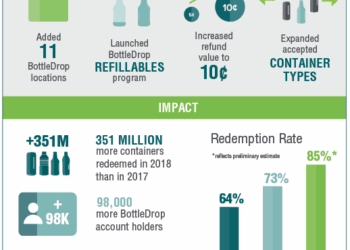
Data Corner: Nearly 50 years of container-redemption evolution

Oregon was the first state in the U.S. to implement a beverage container deposit/refund system, rolling out its program in 1972. Since then, the system has shown it can keep on a path of continuous improvement. For instance, in recent years, the program expanded its list of covered containers, boosted the redemption value and has seen impressive results (including 85...

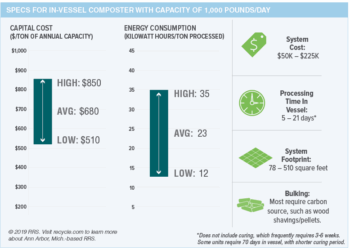
Data corner: The ins and outs of in-vessel composting

Commercial food waste generators – malls, universities and hospitals, for instance – are increasingly interested in diverting food waste from landfills. Those entities often commission a third party to collect the material and deliver it to an off-site composting or anaerobic digestion facility. However, another option is to implement an on-site system, which can reduce or even eliminate collection trips....

Data Corner: The ramifications of collecting less

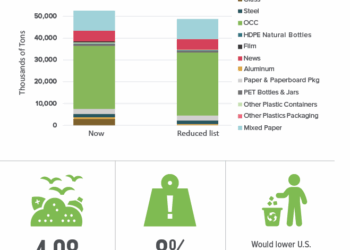
As communities and materials recovery facilities wrestle with challenging markets, some stakeholders are suggesting that programs should accept fewer materials for recycling. Using EPA data, RRS estimated that removing glass and plastics other than PET and HDPE bottles would reduce the nation’s total tonnage recycled by 8 percent and lower the U.S. recycling rate by at least 2 percentage points....

Data Corner: Commitments from corporate giants

RRS tracked the environmental efforts described in the corporate social responsibility reports of the top 50 U.S. companies on the Fortune 500 list. Waste, recycling, energy and greenhouse gas emissions were some of the most common areas for corporate efforts. Over half of the companies (28) reported on goals or progress metrics related to waste and recycling, though only four...

Data Corner: The evolving ton over 25 years

RRS reviewed the 2015 waste stream data in the U.S. EPA 2018 Sustainable Materials Management report and compared it with similar data from 1990. Changes in waste stream composition help to inform adaptation needs in the recycling value chain, including material collection, processing and end markets. Numbers in the recent report indicate the ongoing growth in online information and shopping...

Data Corner: Comparing virgin and recycled feedstocks

RRS analyzed and averaged pricing info from multiple industry data sources - including RecyclingMarkets.net, Plastics News and the London Metal Exchange - to compare the price gap between virgin materials and recycled commodities (baled from the MRF, not processed). The wider a given gap, the greater the technical and market complexities associated with processing materials. Complexities can involve factors such...

Data Corner: Average capacities of North American food scrap composters

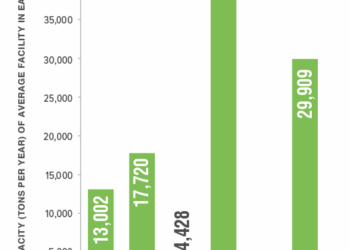
RRS conducted a survey sponsored by the Foodservice Packaging Institute (FPI) to collect information about North American composters that accept food scraps. The chart below displays the average capacity of these composters by the type of processing system they employ. Both size and system variance may be linked to feedstocks processed, community needs, local policy and funding available, as well...

Data Corner: The lithium-ion battery risk at MRFs

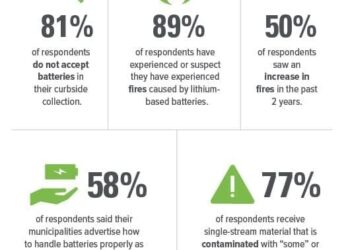
Lithium-ion batteries, which are being used in an increasing number of consumer products, can cause fires and explosions at recycling facilities if they are punctured during processing. RRS conducted a survey that asked 31 materials recovery facility operators, representing 119 MRFs nationwide, about their perceived risk and potential hazards of batteries in the MRF environment. The responses indicate that over...

Data Corner: Material value passing through the hands of US residents

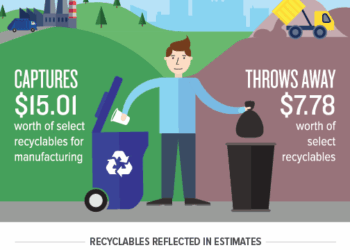
RRS analyzed U.S. pricing averages from recyclingmarkets.net, annual U.S. recycling and landfilling tonnages from the 2014 EPA Sustainable Materials Management report, and U.S. census data to calculate the total per capita value of several commonly recycled packaging types. This allowed us to estimate the value of the portion of these items that are still being sent to landfill. The exercise...

Page 2 of 4 1 2 3 4

Welcome Back!

Login to your account below

Retrieve your password

Please enter your username or email address to reset your password.

Add New Playlist