More Recycling

More Recycling

Data Corner: Statewide recycling support activity

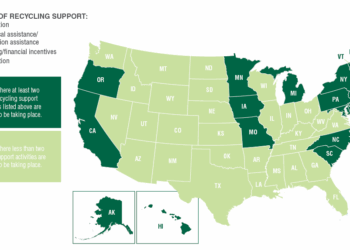
Reclay StewardEdge (RSE) conducted research on behalf of the American Chemistry Council, composite decking manufacturer Trex and the Oregon Department of Environmental Quality to summarize “recycling support” activity in the United States. The research entailed a voluntary survey, interviews and reviews of readily available information. More Recycling contributed to the research and then categorized the statewide activities into four types:...

Data Sort: Statewide recycling support activity

Data Sort: Statewide recycling support activity

Reclay StewardEdge (RSE) conducted research on behalf of the American Chemistry Council, composite decking manufacturer Trex and the Oregon Department of Environmental Quality to summarize recycling market development activity in the United States. The research entailed a voluntary survey, interviews and reviews of readily available information. More Recycling contributed to the research and then categorized the statewide activities into four...

Data Sort: Worldwide expansion of packaging EPR

Data Sort: Worldwide expansion of packaging EPR

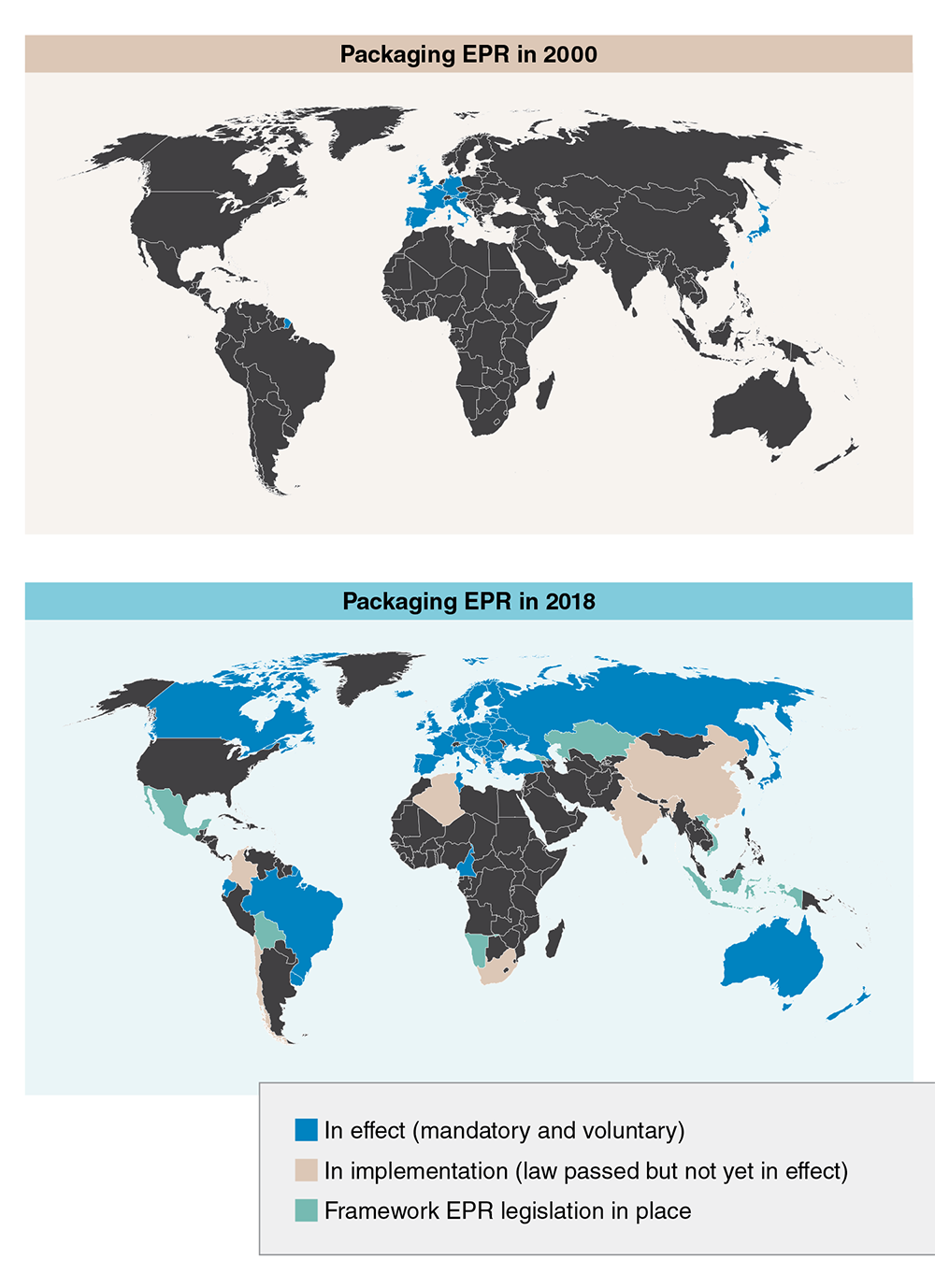
The maps below demonstrate how extended producer responsibility (EPR) programs for packaging have spread around the globe over the last decade, with programs requiring packaging makers to fund recovery systems taking root in a variety of countries. The maps were provided by Environmental Packaging International (EPI), a consultancy specializing in environmental compliance, product stewardship and sustainability related to packaging and...

Data Sort: Worldwide expansion of packaging EPR

The maps below demonstrate how extended producer responsibility (EPR) programs for packaging have spread around the globe over the last decade, with programs requiring packaging makers to fund recovery systems taking root in a variety of countries. The maps were provided by Environmental Packaging International (EPI), a consultancy specializing in environmental compliance, product stewardship and sustainability related to packaging and...

Data Sort: Takeaways on non-bottle rigids

Data Sort: Takeaways on non-bottle rigids

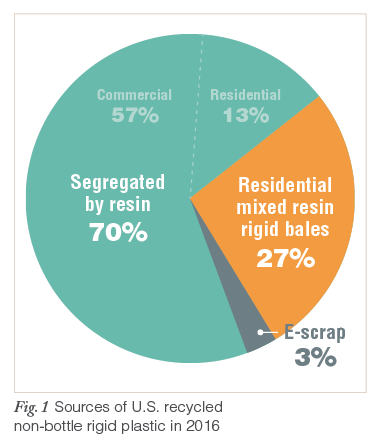
The graphs below show findings from the “2016 National Post-Consumer Non-Bottle Rigid Plastic Recycling Report,” which was released earlier this year. U.S. and Canadian buyers reported a marginal increase in non-bottle rigid plastic acquired from purchasing of mixed-resin rigid bales, with most of their overall increase coming from the purchasing of non-bottle rigid plastic segregated by resin from both residential...

Data Sort: Impacts of boosting PCR in trash bags

Data Sort: Impacts of boosting PCR in trash bags

The largest environmental benefit from plastics recycling comes when post-consumer resin (PCR) is incorporated into a new product, displacing virgin resin that would otherwise be used. To bring that somewhat abstract concept into real-world terms, we analyzed the effects of increasing PCR in one specific everyday item: plastic trash bags. In the U.S. trash bag market, approximately 6 billion pounds...

Data Sort: How demand falls short of supply for recovered PE

Data Sort: How demand falls short of supply for recovered PE

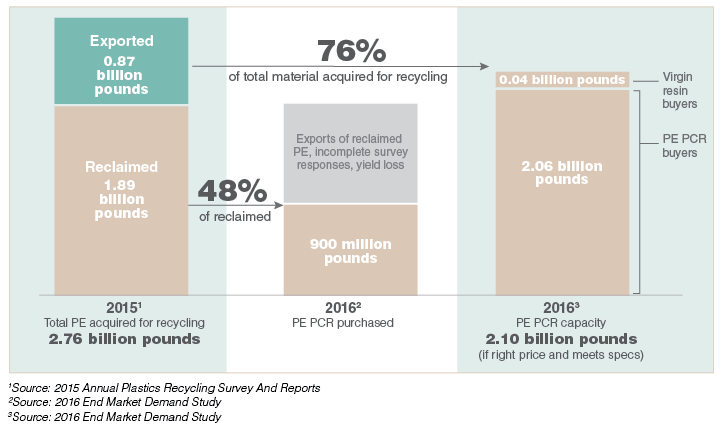
According to the most recent statistics, around 900 million pounds of polyethylene post-consumer resin (PCR) are purchased annually in the U.S. for use in new products, but 2.76 billion pounds of PE are collected for recycling. That means collection is exceeding domestic demand by 1.86 billion pounds. However, information from buyers indicates they could use more if the PCR hits...

Data Sort: A look at what’s sent to export

Data Sort: A look at what’s sent to export

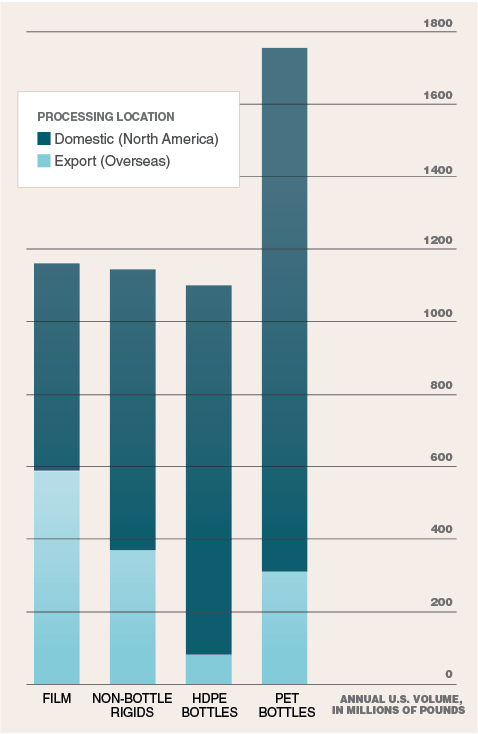
The North American plastics recycling industry is facing uncertainties in terms of the future of export markets as China and other importers evolve policies. Some plastics sectors feel the effects of these developments more than others. According to the most recent research, roughly 28 percent of recycled plastic collected in the U.S. heads to export markets. The graph below shows...

Data Sort: 2015 U.S. reclamation capacity vs. collection

Most material that’s collected in the U.S. for recycling is reclaimed in the U.S., though there is a supply/demand imbalance for some commodities. This imbalance has traditionally been remedied through demand from the export market, but the amount of material going to export has trended downwards since 2009 and will likely continue to decrease going forward, especially in light of...

Page 2 of 2 1 2

Welcome Back!

Login to your account below

Retrieve your password

Please enter your username or email address to reset your password.

Add New Playlist