


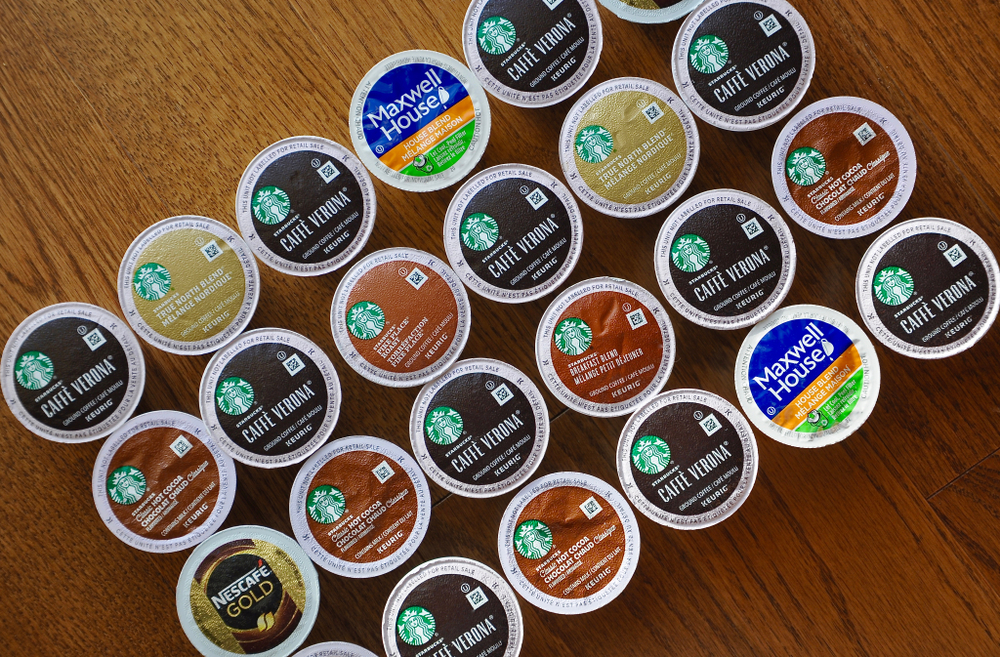
A partnership between Keurig Dr Pepper Canada and Circular Materials has led Ontario to accept the so-called K-Cup beverage pods in its Blue Box recycling program, significantly expanding national access for items that have proved contentious in the past.
The collaboration is part of the transition to a modernized, producer-led recycling system for the province, home to nearly 40% of the Canadian population. For nearly a decade, KDP Canada and recycling system operators across the country worked together on redesign, material conversion and collaboration.
Ontario’s Blue Box system is now fully producer-funded, shifting financial and operational responsibility for residential packaging and paper recycling from municipalities to producers. Under the new EPR framework, companies supplying packaging into the province must ensure it meets defined recyclability standards and contributes to measurable recovery outcomes.
Single-serve coffee pods have long faced scrutiny over their environmental footprint, particularly around recyclability. Early pod designs often posed challenges for MRFs due to mixed materials, residual coffee grounds and inconsistent acceptance across municipal programs.
Cynthia Shanks, senior director of corporate affairs for KDP Canada, noted the company’s journey toward broader recyclability began following a key provincial shift nearly 10 years ago.
“Following British Columbia’s inclusion of K-Cup pods in 2016, the company focused on aligning its packaging with the realities of Canadian recycling systems,” Shanks said. “A key milestone was completing the transition of our Canadian portfolio to recyclable polypropylene #5 in 2020, a resin broadly compatible with curbside collection, sorting and end markets. We then continued working with system operators to further optimize performance within evolving extended producer responsibility frameworks.”
Now about 75% of Canadian households have access to curbside acceptance of empty K-Cup pods, Shanks said.
Peelable lid
The transition to recyclability laid the foundation for broader provincial acceptance. Shanks explained that ongoing collaboration with recycling stakeholders helped shape further design improvements, culminating in a peelable lid. Rollout of the lid across the company’s Canadian portfolio took place in 2025, the year Québec achieved province-wide acceptance of pods under its modernized EPR system, she said.
A province-wide education campaign will provide instructions to peel off the lid, empty the grounds into the green organics bin and recycle the pod.
Beyond materials and manufacturing, system performance depends heavily on consumer participation and proper preparation. Residual coffee grounds can contaminate recycling streams, lowering material quality and increasing processing costs. To address that challenge, the company focused on both design and education.
“From a processing perspective, an important focus has been supporting effective recycle-right behavior,” Shanks said.
Coordination across the recycling value chain
CEO Allen Langdon of producer responsibility organization Circular Materials, which administers Ontario’s collection system, said the effort required close coordination across the recycling value chain.
“Circular Materials and Keurig Dr Pepper Canada have worked closely at every stage of this initiative to deliver strong results for both residents and the recycling system,” Langdon said. “The K-Cup pod lid was redesigned in collaboration with recycling system partners, including Circular Materials, to better align with how materials are collected and processed in Ontario’s modernized Blue Box system.”
Circular Materials has been working to expand and unify what residents can recycle regardless of municipality. The addition of K-Cup pods aligns with broader efforts to standardize accepted materials and simplify recycling rules across the province.
“This advancement is a great step towards the circular economy, and we’re thrilled to continue building on this momentum,” Langdon said. “Designing for recyclability allows packaging and paper materials to be more easily recovered and returned to producers for use as post-consumer content in new packaging and products.”