Resource Recycling Magazine
Senate committee narrowly approves EPA nominee
By Editorial Staff, Resource Recycling
President Obama's pick for the new director of the U.S. Environmental Protection Agency is one step closer to starting work as Gina McCarthy's nomination moves to the Senate floor on a party-line vote.
The contentious nomination of McCarthy, blocked last week by Senate Republicans, was approved by the Senate Environment and Public Works Committee by a 10-8 vote, strictly along partisan lines. The nomination now heads to the floor of the Senate, where approval is not assured, with Senate Republicans threatening to filibuster unless given more information about how McCarthy would run the agency.
At issue, according to David Vitter of Louisiana, the ranking Republican on the Environment Committee, are five "key" transparency demands that he says that McCarthy and the agency have not answered, though progress has been made. And if more information is given by the nominee — who has already answered a record number of over 1,000 questions — Vitter will support the nomination.
"Should major additional progress be made in all of the five [transparency] categories over the next two weeks, I will strongly support handling the McCarthy nomination on the Senate floor without a cloture vote or any 60-vote threshold," Vitter said. "Should all of our requests in the five categories be granted, I will support the McCarthy nomination."
Democratic Senator Barbara Boxer of California told reporters expressed anger that the nomination was held up and called for a floor vote as soon as the nomination was passed out of committee.
"What does surprise me is that you take a woman like Gina McCarthy, who is clearly so bipartisan in her approach — worked for four Republican governors and one Democratic president — was unanimously approved by the very same people who now oppose her — and hold her up and keep her twisting in the wind," Boxer said.
To return to the Resource Recycling newsletter, click here.
Free listings available for the <i>Resource Recycling</i> Equipment Buyers' Guide
If you manufacture recycling or composting equipment, be sure your company is listed in the all-new edition of our Recycling Equipment Buyers' Guide. Go to www.resource-recycling.com/buyersguide or click on the banner below to download a listing form. Send your free listing in today!
Enhanced listings with logos are available. Contact Resource Recycling advertising director, Rick Downing, with any questions. He can be contacted at rickdowning@oh.rr.com or (440) 257-6453.
To return to the Resource Recycling newsletter, click here.
Environmental Services Group buys Curotto-Can
By Editorial Staff, Resource Recycling
Solid waste and recycling hauling equipment giant, Environmental Solutions Group (ESG), is now even bigger, this morning announcing that it has acquired the Curotto-Can Company. Financial terms of the purchase were not disclosed.
ESG, which already owns Heil Environmental, Marathon Equipment Company and Bayne Premium Lift Systems, purchased the manufacturer of trash and recycling collection containers in a deal announced today. Curotto-Can, in the words of the company, makes an "automated carry can that mounts to the forks of a commercial front loader, converting the unit to an automated front loader."
"We are very excited to have John Curotto and his team as part of Environmental Solutions Group," said ESG president Pat Carroll in a press release announcing the purchase. "John is a fourth-generation hauler and an industry pioneer who approaches product design from the hauler's perspective. This maximizes benefits for the end user, which aligns directly with our philosophy at Heil and ESG."
To return to the Resource Recycling newsletter, click here.
Connecticut mattress legislation heads to Governor
By Editorial Staff, Resource Recycling
Connecticut is one more step closer to being the first state in the country to have an extended producer responsibility law for managing end-of-life mattresses.
The Connecticut Senate this week passed House Bill 6437 by a vote of 28-8 which sets up a mattress recovery program be funded by a point-of-sale fee of $8-to-$12. The bill requires the mattress industry to create a nonprofit organization to manage end-of-life mattresses and tasks that organization with "achieving continuous, meaningful improvement in improving the rate of mattress recycling in the state." That organization must submit a plan for approval by the commissioner of energy and environmental protection by July 1, 2014.
According to the Connecticut Conference of Municipalities, there are 10,000 abandoned mattresses currently illegally dumped around the state, which municipalities more than $1.3 million annually to manage. "We seem to be a dumping ground for a lot of the mattresses, in Bridgeport," said Sen. Andres Ayala Jr. to the Connecticut Post. "It is a serious issue in our city."
The bill now moves to Connecticut Governor Dannel Malloy for his signature.
To return to the Resource Recycling newsletter, click here.
Portland, Oregon recycling program dealing with diapers
By Editorial Staff, Resource Recycling
In switching to every-other-week trash pick-up, Portland, Oregon is finding more waste showing up in residents' recycling bins.
According to a report from Oregon Public Broadcasting, switching to every-other-week in October 2011 reduced the volume of garbage by 38 percent in program's first year, but has had to send more than 3,000 letters to homes that were caught tossing trash in their recycling bins.
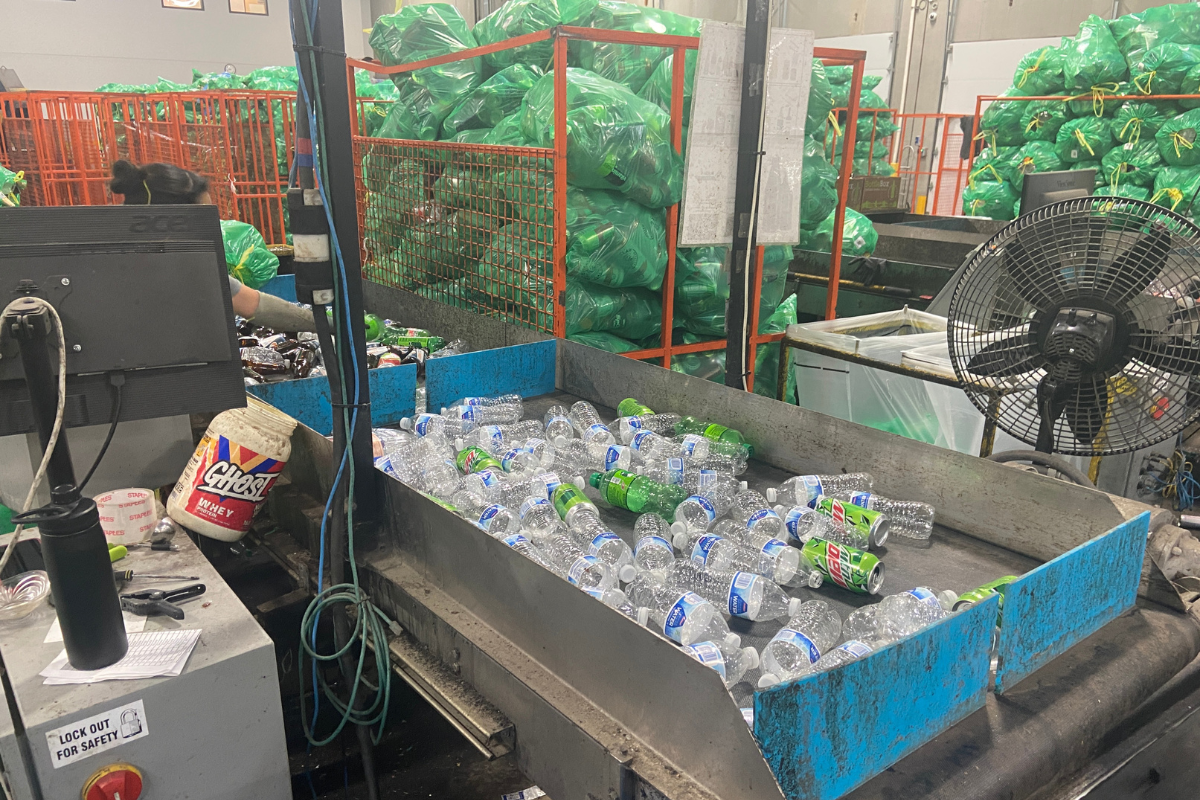
More trash in recycling bins means a harder job for area materials recovery facilities. For instance, Portland-area MRF, Far West Fibers, is seeing an uptick in the number of dirty diapers its seeing on its conveyor belts. Far West Fibers president Keith Ristau told OPB that "prior to that you'd get a dirty diaper maybe once a month. Now we get 60 pounds per shift. It's not pretty.
"In the grand scheme of things, the amount of dirty diapers we get is an extremely small percentage, but it's by far the most disgusting percentage," said Ristau.
To help combat this issue, the City is giving free upgrades to larger trash cans for those who have medical conditions that cause them to create more materials not accepted in the recycling program, such as adult diapers.
To return to the Resource Recycling newsletter, click here.
The wide world of recycling
By Editorial Staff, Resource Recycling
Italy gets new aluminum recycling capacity, Nine Dragons continues to expand and the U.K. faces serious challenges to reach recycling targets.
Aluminum giant Novelis this week announced the opening of a new aluminum recycling and continuous casting line at its Pieve Emanuele facility in Milan, Italy. The 12 million Euro ($15.4 million USD) expansion is part of the company's plan to increase the recycled content of its rolled aluminum products to 80 percent by 2020. Novelis' products are currently made of 43 percent recycled content.
China's Nine Dragons Paper, one of the world's largest consumers of recovered fiber, announced plans to have six production lines launch over the next three years, which includes five production lines in China, as well as a packaging paperboard production line in Vietnam with annual production capacity of 350,000 metric tons. In total, the move is expected to add more than 2 million metric tons to the company's production capacity.
The U.K. is going to have a difficult time meeting new packaging recycling targets, according to new analysis from plastics recycling organization Recoup.
According to the 2012 UK Household Plastics Collection Survey, sponsored by Recoup, GlaxoSmithKline, Nampak Plastics and Wellman Recycling, the new targets require a 5 percent annual growth rate in plastic packaging recovery for U.K. businesses through 2017, which will take the required collection rate from 32 percent in 2012 to 57 percent. Plastic packaging collected from households will need to double from 470,000 tons collected in 2011 to over 913,000 tons by 2017. For context, over 1.3 million tons of rigid plastic packaging entered the U.K. household waste and recycling stream in 2011 alone.
The report highlights progress in many areas of plastic recycling. The plastic bottle recycling rate now exceeds 52 percent, for instance, and the recycling rate for plastic pots, tubs and trays is now over 20 percent. However, the report says without significant progress in the collection and recycling of packaging, the U.K. will miss its overall plastic recycling targets.
To return to the Resource Recycling newsletter, click here.
<i>RR Conference 2013</i>: Looking at dual- and single-stream
It's widely known that single-stream recycling collection has become increasingly popular in North America. The primary factors cited for the switch include potential cost savings and the potential for higher diversion, but how has this switch actually impacted municipalities? A thorough assessment, prepared for the Continuous Improvement Fund, turns a critical eye towards nearly 30 single- and dual-stream systems as it examines implications regarding collection, processing, end-market material quality and diversion potential.
Find out what works for recycling at the 2013 Resource Recycling Conference to be held August 27-28 at the Marriott Louisville Downtown in Louisville, Kentucky. For more information, including information on booking a hotel room, session topics, or exhibiting and sponsorship opportunities, please visit www.rrconference.com or click on the banner below.
To return to the Resource Recycling newsletter, click here.
NewsBits
By Editorial Staff, Resource Recycling
San Francisco's sole waste and recycling hauler, Recology, is piloting a pay-as-you-throw program, which will reward residents for setting out their trash cans less. The "Pay Per Setout" program offers a 10 percent savings to residents for each week they skip setting out their trash cans, up to three weeks per month.
Want to bring the three r's to your back pocket? A blog called Alizul recently highlighted 10 unique wallets that can be made from recycled and reused objects.
Some shopping malls owned by Simon Property Group, Inc. have begun retrofitting their properties to include a "plastic room" which includes baling and storage operations for plastic bags, shrink wrap, packaging and other materials. The move is the latest recycling action by the company, which says it has increased diversion at its properties by 25 percent over the last two years.
Wisconsin has reached an electronics recycling milestone. The Associated Press reports that since going into effect three years ago, the Badger State's e-scrap recycling program has collected 100 million pounds of covered electronics for recycling.
To return to the Resource Recycling newsletter, click here.
Green Fence divides recycling industry
By Editorial Staff, Resource Recycling
The plastics recycling industry is grappling with what to do about China's Green Fence, with some arguing it's a disaster and others saying it's the best thing to happen to domestic plastics recycling in years.
Last February, China announced a 10-month enforcement campaign relating to the import of waste and recycling materials into the country. The regulations, which passed in 2009, mandate that incoming bales of material must have contamination levels of less than 1.5 percent. The enforcement of the tougher standards has hit mixed plastic bales and Nos. 3-7 bales especially hard, with containers either piling up at Chinese ports or being shipped back to the U.S. at a shipping cost to Los Angeles/Long Beach of approximately $2,100 per container. Affected mixed bales are ones where contaminants consist of unacceptable levels of metal, paper, organic material or other non-plastic materials. Plastic bales where the "contaminants" are simply other resin types are typically not targeted.
Those that have been calling for increased domestic recycling of plastics for years are embracing the move.
"This is great news for American processors," says Scott Saunders, general manager for KW Plastics. "I don't buy the argument that MRFs [materials recovery facilities] have nowhere to sell material. There are lots of ready recyclers here in the U.S."
Many argue that since Chinese inspection officials have made exporting plastic material considerably more difficult, it will actually stimulate more recycling in the U.S. and make the domestic market more competitive with Chinese buyers. Some sources have told Plastics Recycling Update that the crackdown over the last few months has already stimulated increased activity in the domestic market.
But others are urging caution. Arguing that many MRFs have not invested in the technology necessary to produce bales with low enough contamination rates to be useful, other sources tell PRU that they fear a collapse in No. 3-7 collection and recycling, with much of the material potentially heading to landfill.
If you want to share how the Green Fence is affecting you in an upcoming article, email editorial@resource-recycling.com.
To return to the Resource Recycling newsletter, click here.
Free listings available for the <i>Resource Recycling</i> Equipment Buyers' Guide
If you manufacture recycling or composting equipment, be sure your company is listed in the all-new edition of our Recycling Equipment Buyers' Guide. Go to www.resource-recycling.com/buyersguide or click on the banner below to download a listing form. Send your free listing in today!
Enhanced listings with logos are available. Contact Resource Recycling advertising director, Rick Downing, with any questions. He can be contacted at rickdowning@oh.rr.com or (440) 257-6453.
To return to the Resource Recycling newsletter, click here.
EPA nominee blocked by Republican senators
By Editorial Staff, Resource Recycling
Eight Republican U.S. senators from that body's Environment Committee have refused to vote on whether Gina McCarthy can fill the vacated directorship of the U.S. Environmental Protection Agency.
Saying that they had not received enough responses to reportedly more than 1,000 written questions, all of the Republican senators on the Environment Committee boycotted a vote that would have allowed her nomination to move on to the floor of the Senate. Even if the vote had been allowed to occur, McCarthy — who has been described as a "friend to recycling" — faced a filibuster from Senate Republicans.
Even though, according to the Obama administration, McCarthy answered all of the 1,079 questions — a record number — the eight senators were "completely unsatisfied" by many of the answers and refused to let the committee vote on her nomination.
"They may not like the answers, but she's given them the answers," said Senator Tom Carper (D-Del).
Obama's first EPA administrator, Lisa Jackson, was asked 157 questions during her nomination hearings.
To return to the Resource Recycling newsletter, click here.
Cincinnati ends Recyclebank program
By Editorial Staff, Resource Recycling
Cincinnati has ended its partnership with recycling rewards firm Recyclebank, citing disappointing participation rates in the rewards program.
Despite a 46 percent increase in the amount recycled by the Queen City's residents over the last four years — from approximately 12,175 tons in 2008 to 17,800 tons in 2012 — the City Council decided to end the rewards program. The almost 18,000 tons recycled, however, makes for a 17 percent recycling rate, far below the 25 percent target the city hoped to reach by 2013 and just over half of its 2015 goal of 30 percent.
In making the move, the city says that it will implement its own rewards program. "We will continue to improve access, make recycling easy and find new ways to incentivize more residents to participate," said Larry Falkin, director of the City's Office of Environmental Quality.
According to a report in kypost.com, despite the City Council's actions, Recyclebank considers the Cincinnati program's gains an accomplishment.
"Since the city went from bins to larger carts and added incentives from Recyclebank in October 2010, more than 75 million pounds have been recycled — that is a 39 percent lift over baseline," Elissa Davis a spokesperson for the firm told kypost.com. "In addition, just in the last year, members have earned close to $170,000 in reward value, driving more than $200,000 into the local economy by redeeming Recyclebank rewards."
To return to the Resource Recycling newsletter, click here.
Millions in grants handed out in PA, NC
By Editorial Staff, Resource Recycling
Grants given out to recycling businesses and municipalities can be a key way to boost recycling in states around the country. North Carolina and Pennsylvania do this in spades, recently handing out more than $2.3 million, between the two states.
In the Tar Heel State, the North Carolina Department of Environment and Natural Resources recently named 43 companies to receive $1.1 million in funds through the agency's recycling business development grants.
The grants — click here for a full list — will go to a variety of recycling projects, from expanding operations at a facility that makes recycled-content building products to Republic Services converting a materials recycling facility to a single-stream facility. According to the agency, funding for the grants come from "a percentage of the taxes on solid waste disposal, new white goods such as refrigerators or washers and driers, tire purchases and other sources."
Pennsylvania also announced the recipients of recycling performance grants in the state, with more than $1.2 million in state funds going to seven municipalities. The state hands out grant awards based on total tons recycled and each municipality's recycling rate for the calendar year, 2010 for this round of grants.
This series of grants is part of a year-long effort which has seen the Keystone State award $17.8 million in recycling grants to 131 municipalities and counties for developing and implementing recycling programs.
To return to the Resource Recycling newsletter, click here.
Massachusetts 10-year plan includes single-stream, waste-to-energy
By Editorial Staff, Resource Recycling
Massachusetts recently released a new 10-year master solid waste plan which seeks to boost the Bay State's recycling rate by supporting single-stream curbside recycling collection and, controversially, by reversing an over two-decades-old moratorium on new solid waste incinerators.
The final version of Massachusetts' 2010-2020 Solid Waste Master Plan — "Pathway to Zero Waste" — is meant to provide a roadmap for the state to both increase recycling and reduce the amount of trash being sent to landfill. But the document is receiving many jeers from environmentalists, largely due to the inclusion of a policy shift, ending a 23-year suspension on the building of new waste-to-energy plants, as well as other conversion technologies, in the state.
"Massachusetts should foster innovation that leads us to a sustainable future — new technologies for reuse, repair and remanufacturing — not for destroying resources," said the local environmental group Clean Water Action's solid waste director, Lynne Pledger in a press release slamming the shift. "This decision means jobs going up in smoke."
For its part, the Patrick administration noted that "Massachusetts can no longer afford the same old methods of managing waste and it's unwise to rely on exporting our trash to other states," Kenneth Kimmell, the Department of Environmental Protection commissioner, said ¬in a statement. "By encouraging the development of innovative technologies, we can address that portion of the waste stream that ¬recycling cannot now handle."
Kimmell said that, to reach the state's goals of reducing waste by 30 percent by 2020 and 80 percent by 2050, a variety of programs would have to be implemented, including supporting the expansion of the state's beverage container deposit program to include more containers, such as water bottles, as well as expanding single-stream recycling collection around the state.
To return to the Resource Recycling newsletter, click here.
Keep America Beautiful, Goodwill partner to reduce end-of-year campus waste
By Editorial Staff, Resource Recycling
A pilot program by Goodwill and Keep America Beautiful seeks to find best practices for end-of-year dumping on college campuses.
Working in conjunction with the College and University Recycling Coalition (CURC), the pilot, "Give and Go: Move Out 2013," was launched at five schools around the country: Creighton University (Nebraska); Franklin College (Indiana); Northern Illinois University; Trinity University (Texas); and University of Toledo (Ohio).
Local Goodwill agencies are providing large containers to collect unwanted goods, such as unwanted books, clothing, electronics, kitchen utensils and other items from dorm rooms that students don't want to lug home with them.
The collected materials are then sold at the local Goodwill stores, with proceeds going to job training and other community-based services for those in need.
"We're excited to partner with Goodwill on this project," said Matt McKenna, president and CEO of Keep America Beautiful in a press release announcing the program. "Give and Go is a fantastic opportunity to demonstrate to students that waste reduction means more than simply recycling cans and bottles. Working with Goodwill to pilot this collection program will help us develop best practices that can help many other schools in future years."
As part of the program, schools receive additional marketing and technical support to help increase student participation.
According to Keep America Beautiful, the group's involvement in the program fulfills a commitment made through the Clinton Global Initiative-University (CGIU). The results of the pilot will be incorporated into a report submitted to CGIU later on this year.
The issue of end-of-year campus waste was also the subject of the most recent Recycling Online column in the May issue of Resource Recycling. Click here to read more.
To return to the Resource Recycling newsletter, click here.
Newsletters reach record readership
The three weekly electronic newsletters published by Resource Recycling, Inc. now reach more than 47,000 managers and executives. "As likely the largest distributor of recycling-only news in North America, I'm very pleased with our continuing growth in readership," said Jerry Powell, the firm's president. The company's municipal waste recycling periodical, Resource Recycling, is distributed to more than 24,000 industry leaders, while Plastics Recycling Update and E-Scrap News are published weekly for audiences of between 11,000 and 12,000 each.
To return to the Resource Recycling newsletter, click here.
APR to address shrink sleeve labels
By Editorial Staff, Resource Recycling
The Association of Postconsumer Plastic Recyclers has formed a working group to tackle the problem of contamination in bales from full wrap shrink sleeve labels.
Full wrap labels can obscure NIR sorting technology, resulting in incorrect resin identification of a container. Additionally, these types of labels are difficult to remove using current automated label-removal technology. The Label Working Group will work with the packaging industry to improve the recyclability of containers and labels. APR also used the announcement to call attention to its guidelines on the use of full wrap shrink sleeve labels, saying they should be easily removed using standard bottle-wash methods and that they should not impair the functionality of sortation equipment.
"Full wrap shrink sleeve labels are a critical issue facing plastics recycling today," said Steve Alexander, executive director for APR. "While they are extremely popular with brand owners, they represent a nightmare for most recyclers, and render the containers they cover mostly unrecyclable."
The group is scheduled to meet at the upcoming APR membership meeting in Baltimore, June 11-13.
The important issue of full wrap shrink sleeves has been explored in detail in the new issue of Resource Recycling. Click here to read the story.
To return to the Resource Recycling newsletter, click here.
<i>RR Conference 2013</i>: Labeling "How2Recycle"
Variation in recycling programs, unclear labeling and inaccurate recyclability claims make proper recycling a real challenge. To combat these barriers, GreenBlue's Sustainable Packaging Coalition (SPC) created the How2Recycle Label to provide consistent and transparent on-package recycling information to consumers. The recent soft launch of the How2Recycle had participation from a dozen companies, but SPC hopes to have the label on most consumer goods packaging by 2015. This timely presentation by industry expert, Anne Bedarf, offers the nitty-gritty details about this promising tool, including how you can get involved.
Find out what works for recycling at the 2013 Resource Recycling Conference to be held August 27-28 at the Marriott Louisville Downtown in Louisville, Kentucky. For more information, including information on booking a hotel room, session topics, or exhibiting and sponsorship opportunities, please visit www.rrconference.com or click on the banner below.
To return to the Resource Recycling newsletter, click here.
NewsBits
By Editorial Staff, Resource Recycling
In the first of what The New York Times is calling a "Retro Report," the Grey Lady is taking a look back at the infamous Mobro 4000, the trash-laden barge that cast about along the Atlantic coast line, and beyond, looking to find a landfill to take its load of New York trash. In these reports the Times purports to revisit and correct the record, in a way, though its conclusion on the "Gar-barge" story seems somewhat spurious — that shipping trash long distances "makes business and ecological sense."
A 145,000-ton-per-year deinked market pulp mill in Natchez, Mississippi has been reopened by von Drehle, the tissue products maker. The mill had been closed for the past half-year.
Trex is rolling out a new line of compressed-air mini balers to aid collection of thin-film plastics in South Carolina. The machines are compact and can be installed at retail collection sites. Trex hopes to eventually expand the statewide program to the rest of the country.
Get ready for bio-based plastic, China, because Coca-Cola has announced it will soon be launching its PlantBottle in the country, according to a report in Plastics News. Since first hitting the market in 2009, the sugarcane-sourced PET bottle resin has been used in 24 countries.
To return to the Resource Recycling newsletter, click here.
Big changes at advocacy organizations
By Editorial Staff, Resource Recycling
Both the American Institute for Packaging and the Environment (AMERIPEN) and the U.S. Composting Council (USCC) announced new executive directors this week.
AMERIPEN yesterday named Donna Dempsey its new executive director, filling the role of Joan Pierce, who retired in February of this year. Dempsey, who starts the new job June 3, is coming to the packaging advocacy group from being a public affairs executive representing the plastics packaging industry. She was also the executive director SPI's film and bag division from 1999 to 2007.
"Donna brings more than fifteen years of experience to AMERIPEN, having demonstrated strong leadership, advocacy and communication skills in prior roles within the packaging industry," said AMERIPEN President Gail Tavill of ConAgra Foods, Inc. in a press release announcing the hire. "AMERIPEN's Executive Committee is very much looking forward to taking this organization to the next level, accelerating toward our goals and mission. We believe Donna will be a great asset in that endeavor."
The USCC also named a new executive director yesterday, tapping Lori Scozzafava, whose last industry position was with the Solid Waste Association of North America (SWANA), where she was the deputy executive director from 2004 to 2012. Scozzafava is replacing the outgoing director, Michael Virga, who is leaving to pursue other career opportunities.
"Lori's extensive industry and association management experience will help the USCC and its membership reach their goals and rise to a new level," said Lorrie Loder, president of the USCC in a press release.
"The timing is perfect to position organics management into national prominence as a major contributor to achieving recycling goals and environmental sustainability," said Scozzafava.
To return to the Resource Recycling newsletter, click here.