E-Scrap News Magazine
Basel meeting ends, but debate continues on reuse and refurbishment
By Editorial Staff, Resource Recycling
More reactions are coming in on a disagreement over reuse and refurbishment at the recently-concluded Basel Convention meeting in Geneva.
Last week, representatives from developing countries voted against proposed rule changes that would have exempted non-working, but potentially repairable electronics from the Basel Convention's hazardous waste control procedures. Since a consensus could not be reached at the meeting, the proposal was not adopted. Current rules allow devices to be exported for repair and reuse.
The Information Technology Industry Council, which had advocated for the change, says it "strongly backs tough protections to prevent products at the end of their lives from being dumped in places without the facilities or specialization to handle them." ITI says the proposal was necessary to allow warranty returns to OEMs to be considered products, rather than wastes.
Despite assurances that the revisions would be in service of greater repair and refurbishment among OEMs, environmentalists cheered the failure of the proposal as a victory against the flow of hazardous waste to the developing world.
"ITI has lost a lot of credibility in this process. They tried to flex their lobby muscle and place a monumental loophole in Basel," said Basel Action Network executive director Jim Puckett. "The basic rule of the guideline concluded that if something is not working or its functionlaity has not been tested, then it is deemed to be a hazardous waste. The older mobile phone (MPPI) and computing equipment (PACE) guidelines for transboundary movement had basically concluded this as well but included an exemption for warrantied material... ITI over-reached and begin demanding wide-open exemptions for virtually all exports of e-waste as long as a destination of repair was asserted. It would have opened the doors wide to fully legal trade because all one would have to do is claim that your material was bound for repair. This would have spelled the demise of the electronics recycling industry in North America and Europe as we know it because there would be a disincentive to actually dismantle or shred materials as export of whole equipment would be totally legal."
However, industry groups and many of the developed nations that backed the proposal say that could not be farther from the truth.
Rick Goss, ITI senior VP for environment and sustainability, flatly denied the allegation that technology companies were trying to send unusable electronics overseas, saying that BAN's press release — which asserted the proposal would "widen the floodgates of a tide of toxic techno-trash" — was "inflammatory misinformation."
"Electronics companies operate [repair and refurbishment] facilities around the world. We want to ensure that the Basel Convention recommendations don't have unintended consequences of preventing companies from fixing or refitting products that still have useful life in them," said Goss in a statement. "We want to avoid requirements that could unintentionally prevent a customer from sending a product back to the manufacturer for repair; a lessee from returning used computers and servers to the lessor; a manufacturer from conducting important diagnostic work on a piece of failed equipment; or, a company from shipping a used part to a foreign market to fix sophisticated medical equipment or a computer server."
When asked why the proposed changes were necessary for OEMs to pursue refurbishment activities, Goss said "There is nothing currently in the Basel Convention text that impedes our members' refurbishment activities. That said, there are some national laws that do inhibit the reuse of devices."
The next meeting of the Conference of Parties to the Basel Convention (COP-12) is tentatively slated for 2015, where backers of the proposed rule changes will have another opportunity to convince developing countries to sign on. Rules are adopted at the meetings through consensus among signatory countries, which would be needed for any change to move forward. If a change were to be adopted, it would then be up to individual countries to update their national laws to reflect the Basel Convention update.
To return to the E-Scrap News newsletter, click here
E-Scrap 2013: Bring your own device and take-back
Companies, organizations and managers of large volumes of IT assets can't seem to get enough of the bring-your-own-device trend, where employees provide their own personal electronics for work. But the money saved on IT procurement and management costs come at a price. This presentation tackles the legal, data security and recycling problems associated with the BYOD trend and gives you the information you can use to handle the changing enterprise IT landscape.
The E-Scrap Conference will be held at the Omni Orlando Resort at ChampionsGate in Orlando, Florida, September 11-12. Early-bird registration is available at www.e-scrapconference.com or by clicking the banner below.
To return to the E-Scrap News newsletter, click here
Sims rolls out mobile device asset management services
By Editorial Staff, Resource Recycling
Sims Recycling Solutions announced this week it has expanded its asset management services to include cell phones and mobile devices.
Through the use of additional inspection and repair technicians at the company's West Chicago facility, as well as through Sims' partnership with mobile device database firm CheckMEND, the company now offers testing, data security, repair, resale and recycling services for conventional mobile phones, smartphones and tablets. The announcement comes just three months after SRS signed an agreement with CheckMEND to utilize the company's robust database on mobile devices, which includes over 150 billion records from over 30,000 agencies worldwide. The access allows Sims to compare collected device identifiers to those of lost or stolen devices.
"As an extension of our existing asset management services, we have added new ones that simplify the task of managing mobile devices," said SRS Americas president Steve Skurnac in a prepared statement. "By using our established global infrastructure, technical expertise and strategic partnerships, Sims is able to fully support the needs of those customers with broken, end-of-life or surplus devices. Our customers can be confident that the same secure, certified and environmentally sound procedures we use to process other electronics will be used to refurbish, remarket and recycle their mobile devices."
To return to the E-Scrap News newsletter, click here
IT spending propped up by new product categories
By Editorial Staff, Resource Recycling
IT spending isn't meeting expectations, according to new numbers from several industry watchers.
International Data Corp. says worldwide annual IT spending growth will be 4.9 percent in 2013 — down from 5.6 percent growth in 2012. IDC placed much of the blame for the slowdown on weaker-than-expected spending in the second half of 2012 and the first quarter of 2013, as a result of uncertainty surrounding the sequester in the U.S., the European debt crisis, and a slowing Chinese economy. Worldwide, total IT spending is expected to hit $2.06 trillion in 2013. Including telecom equipment, IDC expects spending to be $3.7 trillion.
Market research firm Gartner generally corroborates these numbers, predicting global IT and telecom spending to reach $3.8 trillion for 2013. The company says this would equate to a 4.1 percent increase over 2012. Gartner says worldwide spending on devices, which include computers, mobile phones, tablets, printers and similar items, will total $718 billion this year — up 7.9 percent over 2012 despite flat growth in the PC market.
To return to the E-Scrap News newsletter, click here
OEMs push for more competition between WEEE compliance schemes
By Editorial Staff, Resource Recycling
OEMs aren't happy with what they say are the growing costs of compliance with WEEE collection and recycling laws in the U.K., according to several media reports.
According to Letsrecycle, Dell, HP, Samsung, Toshiba and other members of the Joint Trade Associations have released a statement in support of changes to the WEEE Directive's implementation to reduce the cost of compliance in the U.K. Specifically, OEMs argue that the cost of compliance has not been recalculated to reflect a rise in commodity prices, and recommend measures to incentivize competition and choice among compliance schemes.
The JTA represents eight IT trade associations and four producer-led compliance programs that collectively account for over 90 percent of WEEE stewardship in the U.K.
"The government's consultation presents the U.K. with a fantastic opportunity to move to an equitable system allowing maximum freedom and choice for all stakeholders; encourage those collecting WEEE with a net value to collect more and retain more income from properly treated WEEE; and, for the first time, create a system with competition and choice at all levels," said Samsung Electronics U.K. sustainability head Kevin Considine in MRW.
According to reports in LEDs Magazine, companies are backing a proposal that would allow for comparing costs between different producer compliance schemes. The JTA is encouraging all stakeholders to submit comments proposed changes before June 21.
To return to the E-Scrap News newsletter, click here
Certification scorecard
With the roster of companies attaining third-party certifications or audits continuing to grow, E-Scrap News has compiled a round-up of the firms announcing certification this past week.
- Onsite Electronics Recycling in Stockton, California, is now certified to ISO 14001, R2 and e-Stewards.
- Cross-Cut Shredding, Inc. of Melbourne, Florida; Docu Shred, Inc. of East Grand Forks, Minnesota; In Confidence P/L of North Melbourne, Australia; Records Management Solutions, Inc. of Martinsburg, West Virginia; R.K. Black, Inc. of Oklahoma City; Shred-South LLC of Statesville, North Carolina; and Weaver-SecurShred of Akron, Ohio have either achieved or renewed their NAID Certification for Physical Destruction of Hard Drives.
Has your firm recently completed a CHWMEG audit or an ISO 9001, ISO 14001, R2, RIOS or e-Stewards certification? Email henry@resource-recycling.com to be included in this section and in E-Scrap News' quarterly directory.
To return to the E-Scrap News newsletter, click here
NewsBits
IT asset management firm CloudBlue Technologies has expanded its Chandler, Arizona facility to 60,000 square feet and added 30 employees.
New findings from the United Nations Environment Program urge greater recovery and recycling of precious metals, base metals and rare earth metals from used electronics. UNEP says greater recycling of these metals is needed to offset the environmental toll caused by their extraction from virgin sources.
Wisconsin has reached an electronics recycling milestone. The Associated Press reports that since going into effect three years ago, the Badger State's e-scrap recycling program has collected 100 million pounds of covered electronics for recycling.
To return to the E-Scrap News newsletter, click here
R2 to charge annual fee
By Editorial Staff, Resource Recycling
R2:2013 will include an annual fee to maintain certification status, according to R2 Solutions.
Beginning July 1 of this year, R2 certified companies will be charged an annual fee of $1,500 per facility, which will be levied when facilities are certified or have a surveillance audit. In addition to other existing revenue sources, the new fees will support the hiring of additional R2 Solutions staff and support personnel — currently, the organization has only one full-time employee, its executive director — as well as fund additional marketing, quality assurance and international growth.
The number of R2 facilities has grown rapidly with 100 additional facilities now added approximately every six months. At the end of April, 389 facilities worldwide were certified to R2, which under the new fee structure, would equate to $583,500 in annual revenue for R2 Solutions. The R2 Solutions Board of Directors has estimated the organization needs annual income of $750,000 to perform all the quality assurance, training, standard maintenance and other necessary functions to grow the R2 certification program. To date, the organization has existed on an annual budget of less than $250,000.
"The R2 Solutions Board of Directors has thought long and hard about the question of fees. It's a really tough one," said R2 Solutions executive director John Lingelbach, speaking with E-Scrap News. "R2 Solutions has existed by the good graces of a relatively small number of recyclers and customers of recyclers that want to see the R2 program succeed. Many of them have made it clear that they will not continue their support unless we put in place a strategy to share the costs of running R2 Solutions among all those benefitting from the R2 certification. So much of what R2 Solutions will be doing with the proceeds from this new revenue stream will be the same things we have been doing to date, though more thoroughly. And we will add to our education, outreach and marketing activities."
Lingelbach added that while he doesn't anticipate a slowing of the growth of the R2 certification as a result of the new fee structure, he understands that for many smaller firms the annual fee represents a significant cost.
The costs of certification and compliance will be discussed further at this fall's E-Scrap Conference, with a panel of representatives from R2 Solutions, the Basel Action Network and auditing firm GreenEye Partners.
To return to the E-Scrap News newsletter, click here
The latest info on the Chinese market, only at E-Scrap 2013
What do e-scrap processors need to know about China? A lot. Regardless of whether their firm exports material to Asia or not, the policies, processing technologies and manufacturing trends in China directly affect how U.S. firms do business.
Shanghai-based journalist and Bloomberg World View correspondent Adam Minter returns to give E-Scrap Conference attendees an exclusive look inside the country, with detailed, need-to-know information on how your organization can navigate the business landscape across the Pacific. For those wanting to expand their business, this peek over the horizon can't be missed.
The E-Scrap Conference will be held at the OMNI Orlando Resort at ChampionsGate in Orlando, Florida, September 11-12. Early-bird registration is available at www.e-scrapconference.com or by clicking the banner below.
To return to the E-Scrap News newsletter, click here
"Export for repair" at issue in Basel update
By Editorial Staff, Resource Recycling
*UPDATE: The title of this story has been changed to clarify that the existing exemptions have not changed.
Participants at the latest Conference of Parties to the Basel Convention squared off over exports, reuse and refurbishment of electronics this week in Geneva.
A draft proposal that would have exempted non-working, but potentially repairable electronics from the Basel Convention's hazardous waste control procedures was defeated by representatives from developing countries. The exemption was part of a larger proposal to classify non-tested or non-functional equipment as waste, which if determined to be hazardous, would trigger Basel Convention control procedures. Due to the lack of agreement on the repair exemption, however, the draft guidelines were not adopted.
The "export for repair" exemption was supported by the Information Technology Industry Council, major OEMs and many repair and refurbishment advocates, who argued that an exception for equipment that could potentially be repaired and reused was necessary for residents of developing countries to gain access to low-cost computer equipment.
Opponents of the exemption argued that without procedures and monitoring in place to deal with them, the exemption would be used to ship scrap materials to developing countries where they would be irresponsibly disposed of. Critics argued that the exemption would lead to a flood of unrepairable e-scrap flowing from the developed world to the developing world and questioned why potentially repairable equipment could not be repaired in its country of origin.
To return to the E-Scrap News newsletter, click here
NYC launches apartment collection program
By Editorial Staff, Resource Recycling
New York City has launched a new e-scrap collection program for multi-family residential buildings.
The new program, called e-cycleNYC, allows all apartment buildings with 10 units or more to opt-in to the collection program. Building owners can use any combination of permanent storage and collection bins, room cleanouts or organized building events to collect used electronics.
While New York State has had an electronics stewardship law on the books since 2010, collection rates in the Big Apple have lagged behind the rest of the state since implementation, with a landfill ban on covered electronics not going into effect until 2015. According to NYC Department of Sanitation, over half of city residents live in these types of housing units and many do not have access to a personal vehicle, creating barriers to dropping off electronics at designated sites for recycling. The new collection program hopes to counter those barriers and bring the city's collection rate in line with the rest of the state.
Collected e-scrap will be handled by Electronic Recyclers International.
To return to the E-Scrap News newsletter, click here
Free listings available for the Resource Recycling Equipment Buyers' Guide
If you manufacture e-scrap recycling or processing equipment, be sure your company is listed in the all-new edition of our Recycling Equipment Buyers' Guide. Go to www.resource-recycling.com/buyersguide or click on the below banner to download a listing form. Send your free listing form in today!
Enhanced listings with logos and other information are available. Contact Resource Recycling advertising director, Rick Downing, with any questions. He can be contacted at rickdowning@oh.rr.com or (440) 257-6453.
To return to the E-Scrap News newsletter, click here
Tablets see triple digit growth in Q1
By Editorial Staff, Resource Recycling
Worldwide tablet shipments are booming, growing over 142 percent year-over-year in the first quarter of 2013.
The new numbers from International Data Corporation show total shipments of 49.2 million units in Q1 2013 eclipsed total shipments in the entire first half of 2012. By contrast, total worldwide PC shipments according to IDC were 76.3 million units in Q1 2013, falling nearly 14 percent over the same period last year.
Apple shipped 19.5 million units in the first quarter of the year, nearly double the second-place OEM, Samsung, which shipped 8.8 million units. Asus shipped 2.7 million tablets, boosted by strong marketing of the company's Nexus device partnership from Google. Amazon shipped 1.8 million of its Kindle tablets. Microsoft rounded out the top five OEMs shipping approximately 900,000 of its Surface Pro and Surface RT units.
To return to the E-Scrap News newsletter, click here
Certification scorecard
With the roster of companies attaining third-party certifications or audits continuing to grow, E-Scrap News has compiled a round-up of the firms announcing certification this past week.
- Advance Technology Recycling's facility in Peoria, Illinois is now certified to ISO 14001 and R2.
- Back Thru the Future Computer Recycling of Franklin, New Jersey; Business Records Management of Pittsburgh; Doc Mart Storage of La Vergne, Tennessee; Quality Shredding of Deer Park, New York and The Shred Authority of Chicago have either achieved or renewed their NAID Certification for Physical Destruction of Hard Drives.
Has your firm recently completed a CHWMEG audit or an ISO 9001, ISO 14001, R2, RIOS or e-Stewards certification? Email henry@resource-recycling.com to be included in this section and in E-Scrap News' quarterly directory.
To return to the E-Scrap News newsletter, click here
NewsBits
In Europe, 26 scrap electronics compliance programs have joined together to create the official WEEELABEX organization, which will be tasked with harmonizing and standardizing implementation of WEEE collection and processing requirements. The new organization will train auditors to ensure compliance with standards across country borders.
The World Health Organization is launching a new initiative to address the effects of e-scrap on children's health. As part of the fact-finding process of the initiative, the WHO has partnered with Solving the E-Waste Problem (StEP) to gather input from e-scrap recycling professionals. A short survey on the topic is available here, with findings to be discussed this June at a WHO closed working meeting.
Electronic Recyclers International is rolling out a new recycling asset and inventory tracking system to customers. MyTrackTech will allow ERI customers to track their used IT through the recycling and asset management chain, generate different types of reports, as well as improve overall transparency.
New Zealand residents are calling on the government to create a recycling program for used electronics, according to One News. Current proposals to fund such a program would levy a fee at the point of purchase on new electronics.
To return to the E-Scrap News newsletter, click here
CEA announces e-scrap recycling progress
By Editorial Staff, Resource Recycling
Electronics recycling was up 27 percent in 2012 according to the latest findings from the Consumer Electronics Association's eCycling Leadership Initiative.
Members of the initiative, which includes Apple, Best Buy, Lenovo, Samsung and others, collected 585 million pounds of e-scrap for recycling in 2012, compared to approximately 460 million pounds in 2011 and approximately 300 million pounds in 2010. Additionally, the number of participating e-scrap collection sites grew from 5,000 in 2010 to 8,000 in 2012. The CEA says that 99 percent of the material collected in 2012 was handled by third party-certified recycling organizations.
"We want to make recycling electronics as easy as purchasing electronics," said Walter Alcorn, vice president of environmental affairs and industry sustainability for the CEA. "And through the efforts of the Initiative participants, and CEA's efforts to promote eCycling directly to consumers via GreenerGadgets.org, we have made great progress toward that goal."
The announcement was used to highlight progress the program is making toward its "Billion Pound Challenge," in which participating companies and organizations together collect over a billion pounds of e-scrap for recycling annually by 2016.
To return to the E-Scrap News newsletter, click here
Early-bird rate available for 2013 E-Scrap Conference
Early-bird registration for the upcoming 2013 E-Scrap Conference is open at the discounted rate of $510.
The largest conference and trade show in electronics recycling returns to the Omni Orlando Resort at ChampionsGate in sunny Orlando, Florida this fall — September 11-12. Last year's conference and exhibition was the largest to date, with over 1,200 e-scrap professionals from more than 30 countries making new connections and generating new opportunities. All indications are that the 2013 show will be another record breaker.
Register today to take advantage of our early-bird registration and secure your spot among the best and brightest in electronics recycling.
To return to the E-Scrap News newsletter, click here
Circuit board scrap value lowest in two years
By Editorial Staff, Resource Recycling
The weighted average value of precious and base metals in circuit board scrap took a steep dive in April, losing 7 percent of its value from the previous month.
The scrap circuit board index has declined every month since the beginning of the year and now sits at $7.12 per pound, versus $7.98 in January. Compared to April 2012, the current index is down 8.5 percent. In fact, the current average value is at its lowest point since January 2011 and has receded 16 percent from its all-time high of $8.47 per pound, set in August 2011.
This data represents the full metallic values of boards over time and are not the recycling values, as those values do not include the costs involved in actually extracting metal from boards, including freight, sampling charges, assay assessments, smelting, refining, process loss, return on investment, and penalties for various elements, including beryllium, bismuth and nickel.
These values are for the estimated intrinsic metal content of recovered PC boards. Some consumers label such material as mid-value. Lower-value scrap includes monitor and television boards. Higher-value scrap includes network and video cards, and motherboards.
To return to the E-Scrap News newsletter, click here
Ontario responds to program criticism
By Editorial Staff, Resource Recycling
Ontario residents turned in over 82,000 tons of electronics for recycling in 2012, according to new numbers from Ontario Electronic Stewardship executive director Jonathan Spencer, rebutting criticism of the program.
Data from OES shows that year-over-year, e-scrap recycling was up 45 percent in Ontario in 2012. Additionally, the data shows that the cost of the program has decreased from $1,842.99 (Canadian dollars, which is roughly equivalent to U.S. dollars at writing) per ton of material in 2010, to $1,217.60 per ton in 2012.
"Ontario residents and businesses have set the bar high when assessing safe and responsible electronics recycling in Canada. We know that eight in 10 are very concerned about the proper disposal of electronic waste, and the province benefits greatly from their ongoing commitment to e-waste diversion," read a statement from Spencer. "Our commitment to deliver an effective, efficient and convenient program that keeps pace with demand is strengthened by the momentum demonstrated by Ontarians."
OES has faced a repeated criticism of its electronics recycling program — particularly for the "eco fees" collected during the purchase of some new items to fund recycling. A recent editorial column in the Toronto Star cited Sims Recycling Solutions Canada president Cindy Coutts in criticizing alleged export of collected materials to China. According to the column, Coutts witnessed workers burning plastic to recover metals at a facility that partners with an OES processor. The editorial also alleges that other processors in Ontario are afraid to speak up regarding the use of unauthorized downstream processors out of fear of reprisal.
In a separate column, Spencer dismissed the allegations as unsubstantiated, saying "Safe recycling doesn't mean taking a hammer to them. Our approved processors meet rigorous environmental and health and safety standards, and they have to carefully remove each component and dispose of them separately."
OES says its electronics recycling program is "regulated to rigorous environmental standards" and that approved processors are all verified through Canada's Electronic Products Recycling Association's Recycler Qualification Office.
To return to the E-Scrap News newsletter, click here
Call2Recycle outlines yearly growth
By Editorial Staff, Resource Recycling
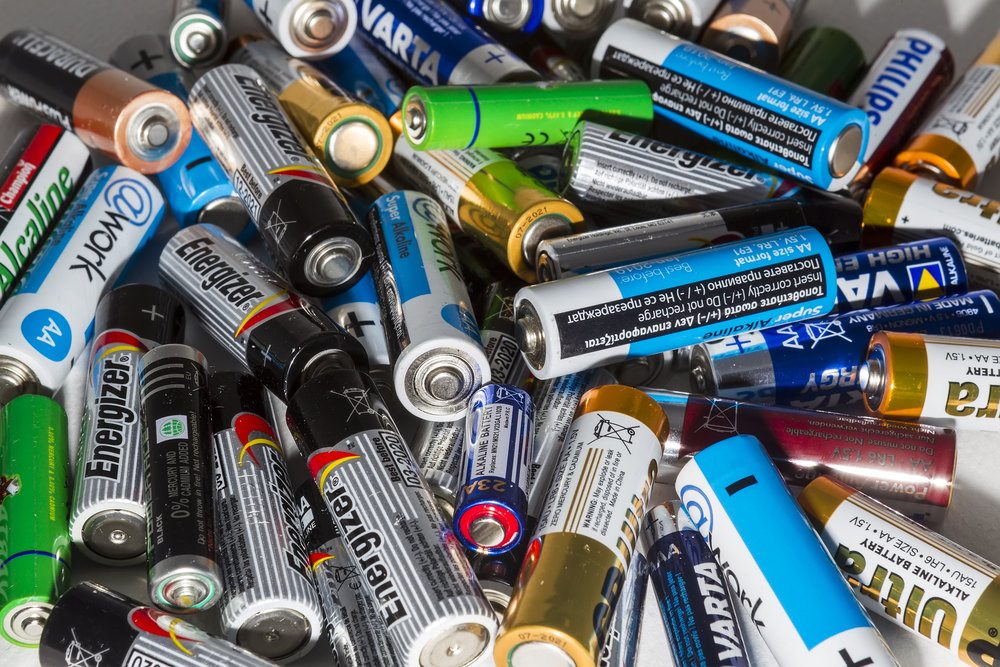
Call2Recycle, Inc. collected over 10 million pounds of batteries in 2012, according to the battery stewardship organization's annual report.
The collection volume for the organization was up 16 percent versus the previous year and marked the third consecutive year of growth for Call2Recycle. One million pounds of the total were collected in Canada, thanks in part to Call2Recycle's selection by Quebec to handle all battery stewardship in the province. California also collected over 1 million pounds of batteries, growing 11 percent year-over-year.
Revenue increased to $15.4 million for the organization in 2012 — up from $14.9 million in 2011. Combined expenses rose from $13.8 million to $16.1 million in 2012. Interestingly enough, despite consumer education and outreach being identified as a key factor in the success of the program, spending on public education actually fell in 2012, from $2.54 million to $2.36 million.
"Our progress in 2012 sets the stage for an exciting future," said CEO and president Carl Smith in the annual report. "We intend to play a major role in educating consumers and shaping recycling policies and practices for the next generation. We fully expect to apply our expertise to areas beyond rechargeable battery collections."
To return to the E-Scrap News newsletter, click here